
Last updated October 16, 2026
 AC repair
 Furnace & heating
 Heat pumps
 Ductless mini splits
 Carrier
 Trane
Trane Goodman
Seasonal tune-up and full diagnostic on your Carrier, Trane, or Goodman system - readings shown to you before any repair is proposed
Diagnosis first, numbers second - you approve the repair price before a single part goes in.
Get your free estimateHVAC Permits, Codes & Inspections in NV: What You Need to Know
Clark County issues roughly 40,000 mechanical permits a year, and a surprising share of them are pulled retroactively, after a home inspector spots a problem during escrow. A missing permit on an HVAC swap in Las Vegas can void a manufacturer’s warranty before you ever file a claim. This guide covers exactly when Nevada law requires a permit, who is legally obligated to pull it, what a Las Vegas inspector actually checks, and how to confirm a permit was closed properly using the county’s public portal. For HVAC Warning Signs: A Las Vegas Homeowner’s Reference Guide, see our related resource. We’ll also walk through what happens when a sale turns up unpermitted work, because that’s the scenario most homeowners only learn about too late.
We have handled permit paperwork for hundreds of HVAC replacements across Las Vegas, Summerlin, Henderson, and North Las Vegas, and we’ve seen the same misunderstanding play out over and over: people assume the contractor’s word is enough. It isn’t. Paper trails are what protect you.
Quick Answer
Most new HVAC equipment installations, replacements, and ductwork changes in Las Vegas require a mechanical permit from Clark County, but routine maintenance and like-for-like part swaps do not. The homeowner is legally responsible for ensuring a permit was pulled, even when a contractor says they will handle it. Before you pay the final invoice, confirm the permit number, schedule the inspection, and verify it shows a final approval in Clark County’s online permit portal. Our AC Repair Maintenance Checklist for Las Vegas Homeowners covers what to verify at each step.
Styles & brands we work with
Table of Contents
- When Nevada Law Requires an HVAC Permit
- What HVAC Work Does Not Need a Permit
- Who Is Legally Responsible for Pulling the Permit
- What a Clark County Inspector Actually Verifies
- How to Confirm a Permit Was Pulled and Closed
- What Happens When Unpermitted HVAC Work is Discovered
- Permit Costs, Timelines, and What Delays Inspections in Las Vegas
- Common Mistakes to Avoid
When Nevada Law Requires an HVAC Permit
Nevada has adopted the International Mechanical Code (IMC) with state-specific amendments, and Clark County enforces it through the Building and Fire Prevention Department. In plain English, that means any work that changes the physical equipment, the ductwork, the gas line, or the electrical connection feeding your HVAC system is a construction activity, not a repair. Construction activities require a permit.
Specifically, a mechanical permit is required in Las Vegas, Henderson, North Las Vegas, and unincorporated Clark County for:
- Full system replacements: swapping an existing furnace, air conditioner, or heat pump for a new unit, even if it goes in the same spot.
- New installations: adding air conditioning to a home that never had it, or adding a split system to an addition or converted garage.
- Ductwork installation or alteration: running new supply or return ducts, resizing existing duct runs, or adding zones with dampers.
- Gas line connections: any change to the gas piping serving a furnace, including adding a shut-off valve or relocating the appliance.
- Electrical service changes: upsizing a breaker, running a new circuit, or changing the disconnect for a higher-ampacity condenser.
- Evaporative cooler to refrigerated air conversions: common in older Las Vegas neighborhoods like Paradise Palms or Sunrise Manor; this requires both mechanical and electrical permits.
If you’re replacing a furnace with a furnace of the same BTU rating and the same physical footprint, the permit is still required. The inspector is checking more than the equipment; they’re verifying the flue, the combustion air, the clearance to combustibles, and the gas pressure. A wrong-sized flue on a high-efficiency furnace can push carbon monoxide back into the living space. That’s a life-safety issue, not bureaucracy.
What HVAC Work Does Not Need a Permit
Homeowners in Las Vegas often worry they need a permit for every service call. Here’s what’s exempt under Clark County’s administrative rules:
- Routine maintenance: coil cleaning, filter replacement, drain line clearing, capacitor testing during a tune-up.
- Like-for-like component replacement: swapping a failed capacitor, contactor, blower motor, igniter, flame sensor, or thermostat for one with identical specifications.
- Refrigerant recharge: adding refrigerant to a system that is low but otherwise intact, assuming no line-set replacement is needed.
- Condensate drain repairs: replacing a cracked PVC drain line or installing a safety float switch.
- Duct sealing: applying mastic or tape to existing ducts without re-routing or resizing them.
The distinction comes down to a single question: are you restoring the system to its original operating condition, or are you changing the system? Restore it, no permit. Change it, permit. A Las Vegas AC repair call on a blown capacitor doesn’t need county paperwork. Replacing the entire condenser absolutely does.
Who Is Legally Responsible for Pulling the Permit
This is the section that surprises most homeowners. Nevada law places the legal obligation for obtaining a permit on the owner of the property or the owner’s authorized agent. In practice, the licensed contractor pulls the permit on your behalf and you pay the fee as part of the project. But if the contractor doesn’t pull it, the county’s enforcement path leads back to the property owner, not the contractor who disappeared.
Clark County administrative code states that no mechanical work may begin before the permit is issued. A legitimate contractor in Las Vegas will provide a permit number before the crew arrives. Not after the install. Before.
When a contractor says “we handle it,” get the number. Then verify it. We have been on jobs where a homeowner paid for a permit that was never pulled, and the first sign of trouble came at the resale inspection. The homeowner had no recourse because the contractor had closed up shop two years earlier.
Here’s what a legitimate process looks like in our experience:
- Contractor provides a written proposal that lists the permit fee as a line item.
- Permit is pulled via Clark County’s online portal or at the permit office at 4701 W. Russell Road.
- Homeowner receives the permit number, typically starting with “BM” for building mechanical.
- Installer posts the permit card in a visible location, usually on the water heater, electrical panel, or a front window.
- County inspects the completed work. The homeowner receives a copy of the final inspection approval.
If a contractor suggests skipping the permit “to save you money,” treat that as a red flag. The $150 to $400 you save on the permit is a fraction of what you’ll pay to fix the warranty, insurance, and resale problems later.
What a Clark County Inspector Actually Verifies
A Clark County mechanical inspector is looking for violations of the International Mechanical Code as amended by Clark County. The inspection is visual and physical, but not exhaustive. Inspectors don’t tear open walls. They check what they can see, measure, and access.
Here are the common items on a final mechanical inspection checklist in Las Vegas:
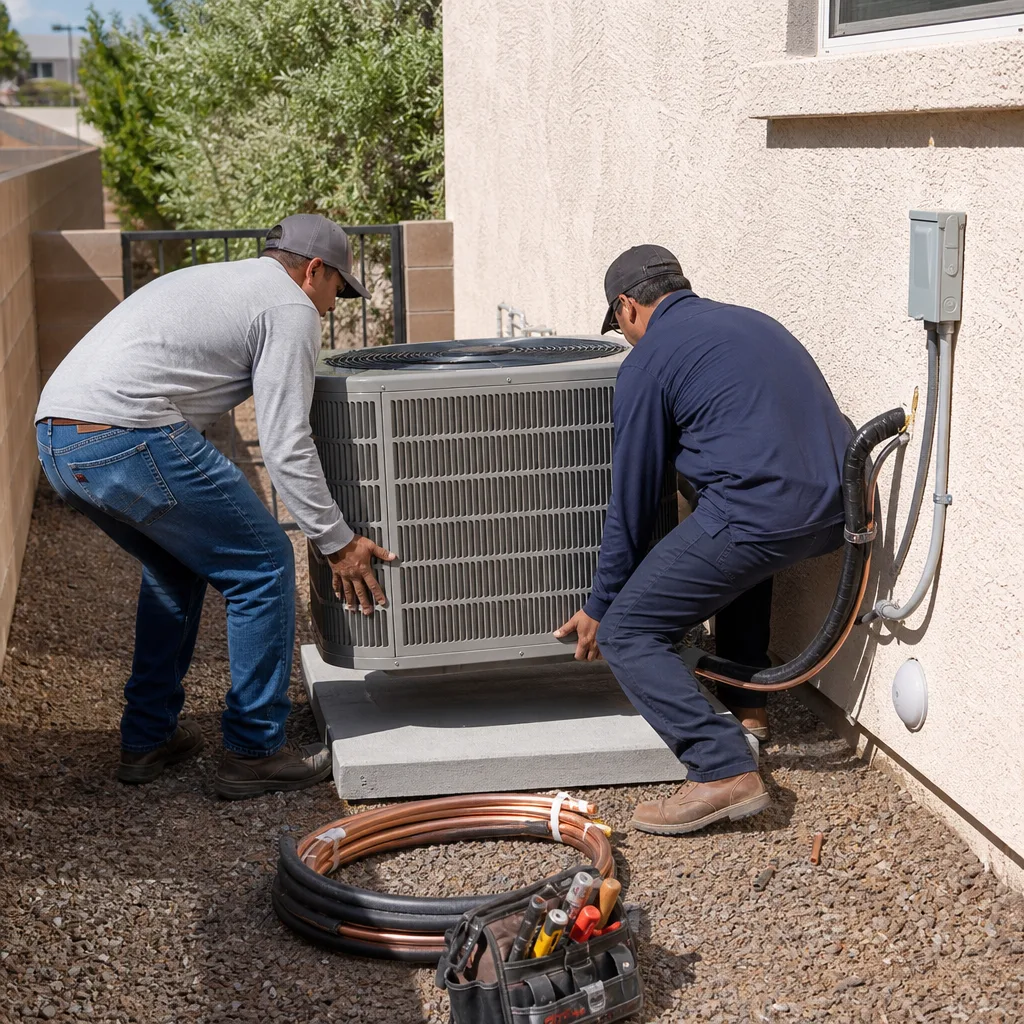
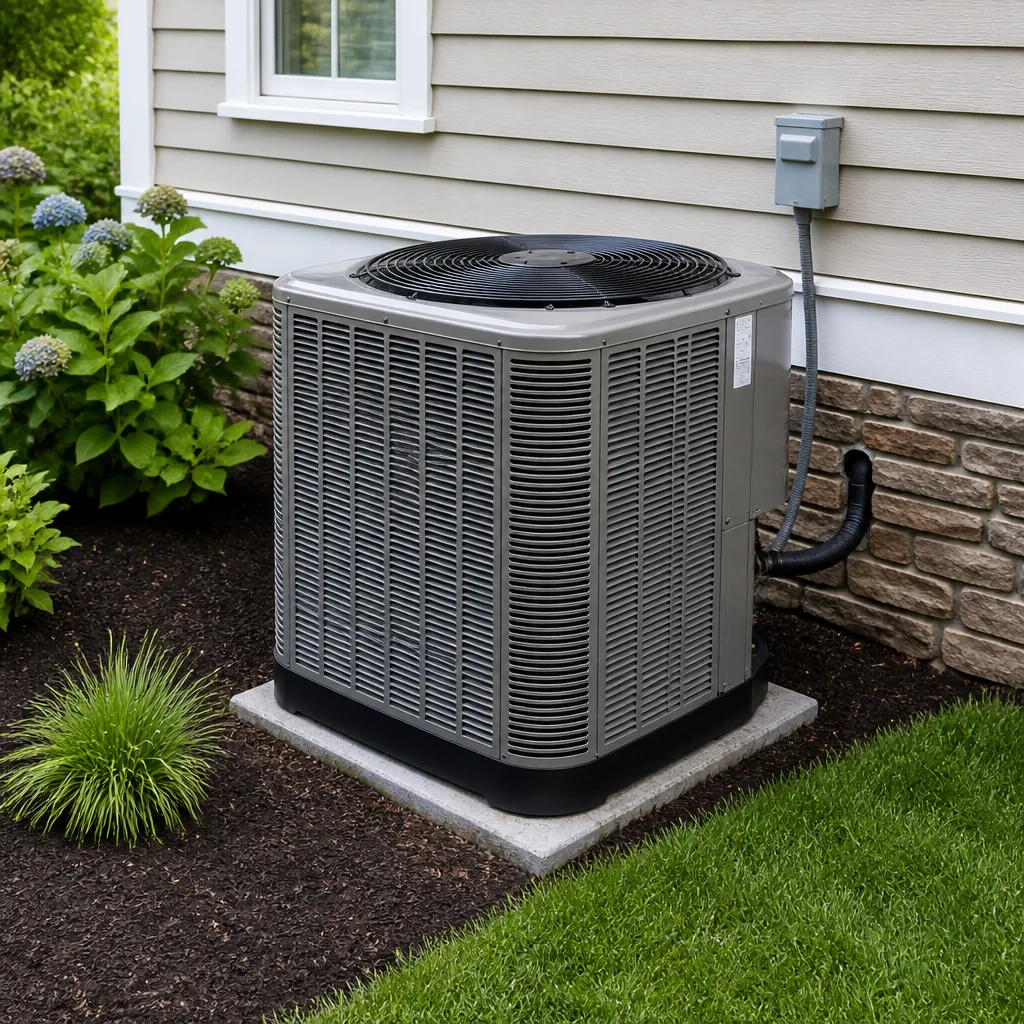
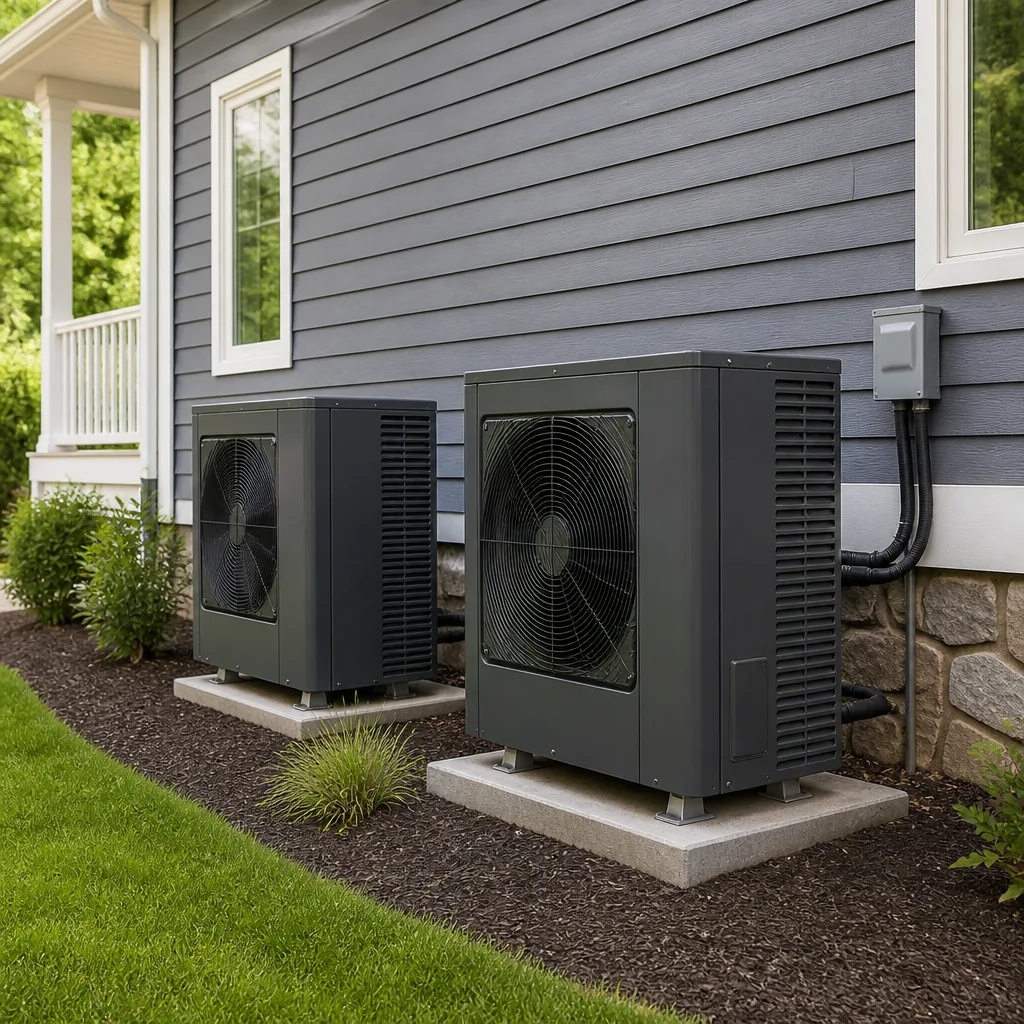
- Equipment clearances: the condenser needs 12 to 30 inches of clearance around the coil, depending on the model, to allow air to move. Las Vegas summers push condensers hard, and a crowded corner installation rejects heat right back into the coil.
- Duct sizing and sealing: the inspector checks the static pressure, the duct diameter at the plenum, and the mastic sealing at joints. Undersized return ducts starve the blower; oversized supply runs whistle.
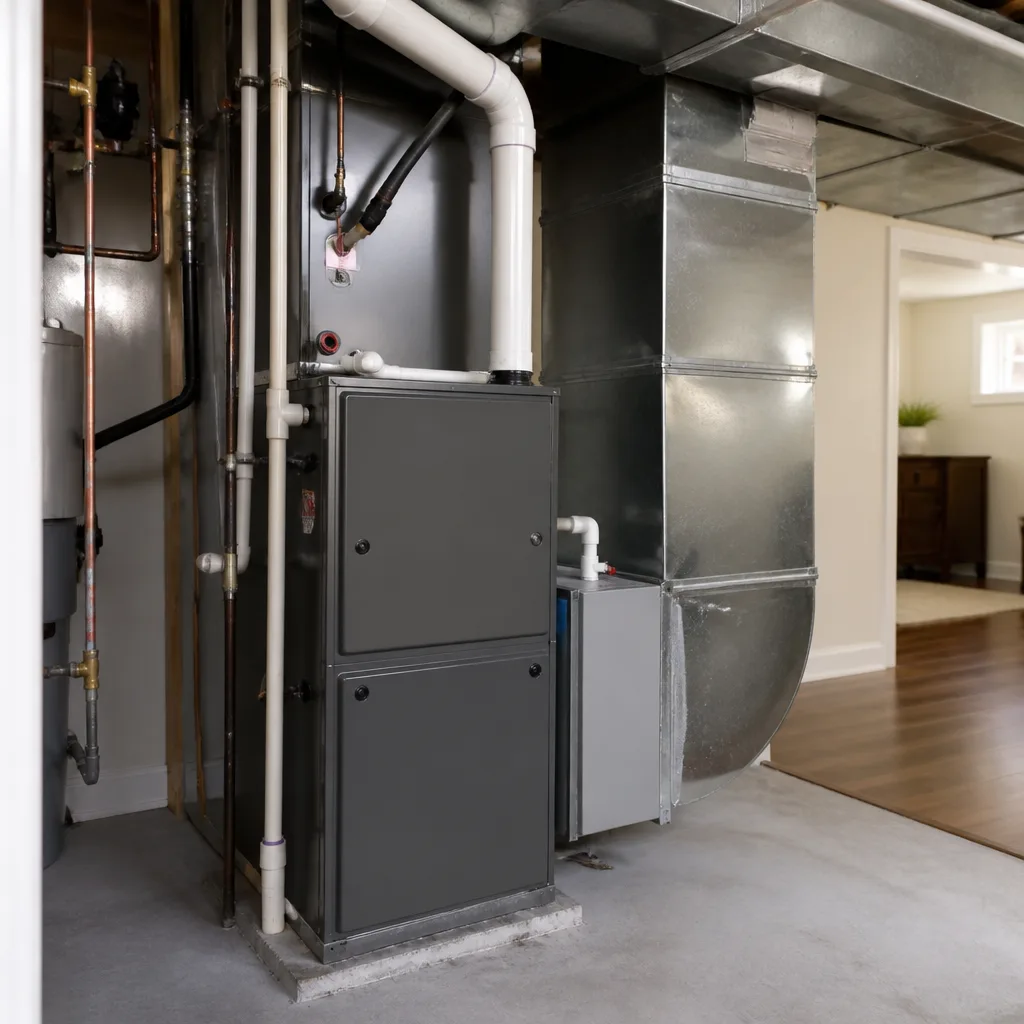
- Gas line pressure: for furnace installations, the inspector checks the manifold gas pressure and the shut-off valve location. The IMC requires a gas shut-off within six feet of the appliance and in the same room.
- Flue and combustion air: the exhaust pipe must slope toward the furnace, have proper clearance to combustibles, and terminate outside with an approved cap. The furnace must also have enough combustion air, either from the room or through a dedicated intake.
- Electrical disconnect: the AC condenser must have a service disconnect within sight and within 50 feet. The circuit breaker must match the equipment’s nameplate rating.
- Condensate drain: the drain must slope downhill, discharge to an approved location, and include a cleanout or overflow switch where required.
- Equipment anchoring: the condenser pad must be level and stable, especially on the grading changes common in newer Summerlin and Inspirada builds.
One point worth knowing: inspectors in Las Vegas apply the 2021 International Mechanical Code with local amendments. If you’re replacing equipment on a home built in the 1980s or 1990s in neighborhoods like Spring Valley or Green Valley, the inspector may flag items that were legal when the house was built but are not code-compliant today, like missing sediment traps on gas lines or undersized returns. A good installer anticipates these from the start.
How to Confirm a Permit Was Pulled and Closed
Clark County maintains a public permit portal where anyone can look up a permit by address, permit number, or parcel number. This is the fastest way to confirm whether your HVAC permit exists and whether it passed final inspection. Henderson and North Las Vegas have separate portals, so use the one that matches your jurisdiction.
Here’s the step-by-step process for Clark County:
- Navigate to the Clark County Building Department’s “Online Permit Search.”
- Enter your street number and street name only, not the full address. The search function is finicky with suffixes like “Ave” or “Dr.”
- Look for a permit with the description “mechanical,” “HVAC,” “air conditioning,” or “furnace.” The permit type code is often BM or MC.
- Check the current status. “Issued” means the permit was pulled but no inspection has happened, or the inspection failed. “Finaled” or “Complete” means the work passed.
- If the permit shows “expired,” the work was never inspected within the required window, typically 180 days in Clark County, and the permit will need to be renewed or re-issued.
We recommend homeowners do this check before writing the final check on any HVAC project in Las Vegas. If the permit is not showing “finaled,” ask why. A reputable company will have a clear answer and a scheduled follow-up inspection date.
If you find that your system was installed by a previous owner and no permit record exists, don’t panic. The county has a “permit for existing work” process, but it requires a licensed contractor to pull the permit and bring the work into compliance. That may mean adding a sediment trap, correcting a clearance, or replacing flexible duct connectors. The correction work usually runs $300 to $1,200 depending on what the inspector finds.
What Happens When Unpermitted HVAC Work is Discovered
The scenario that inspired this guide: a Clark County homeowner listed their home for sale. The buyer’s inspector found a 2022 HVAC system with no matching permit in the county database. What followed was not a quick fix.
Here’s the timeline that unfolded:
- Week 1: The seller admitted the previous contractor “said they’d take care of it.” The permit search showed nothing.
- Week 1, continued: The buyer’s lender flagged the unpermitted modification as a condition of closing. Escrow stalled.
- Week 2: A licensed contractor had to pull a retroactive “alteration” permit and schedule an inspection. The county does not prioritize retroactive permits over new construction.
- Week 3: The inspector found two violations: a gas sediment trap was missing, and the condenser clearance was below code. Repairs took one day.
- End of Week 3: The permit passed final inspection. The sale closed three weeks late.
The direct costs were manageable, around $2,800 total for the contractor, permit, repairs, and re-inspection. The indirect costs were worse: the seller lost leverage, paid extra mortgage and HOA fees for three weeks, and kicked an extra $400 toward the buyer’s rate lock extension. The original “savings” from skipping the permit: about $150.
Even before a sale, unpermitted HVAC work carries real risk. Most manufacturers, including Carrier, Trane, Bryant, and American Standard, write their equipment warranties to require installation by a licensed contractor in compliance with all applicable codes. If a homeowner files a warranty claim on an unpermitted installation, the manufacturer can deny the claim. Homeowners insurance carriers take the same position on HVAC-related property claims. A water leak from a bad condensate pan on an unpermitted install is exactly the kind of claim an adjuster will question.
The permit is not just paperwork. It is the document that proves the equipment was installed legally, which is what your warranty and insurance policies both expect.
Permit Costs, Timelines, and What Delays Inspections in Las Vegas
In Clark County, a typical residential mechanical permit for a furnace or air conditioner replacement runs between $150 and $450, depending on the valuation of the work. A full system replacement with a Las Vegas AC installation and new ductwork usually lands in the $300 to $600 range for the permit alone. This fee is separate from the equipment and labor, and it should appear as a line item on every written quote.
| Scope of Work | Typical Permit Fee Range | Typical Inspection Timeline |
|---|---|---|
| Furnace replacement only | $150 – $250 | 1 – 3 business days after request |
| AC condenser replacement only | $150 – $250 | 1 – 3 business days after request |
| Full system replacement (furnace + AC) | $250 – $450 | 2 – 5 business days after request |
| New ductwork or duct modifications | $200 – $400 additional | 2 – 5 business days after request |
| System conversion (evap cooler to refrigerated air) | $400 – $600 combined mechanical/electrical | 3 – 7 business days after request |
Las Vegas inspection scheduling is generally faster than jurisdictions in other states because the county runs inspections year-round, including summer months. For tips on timing your project, read our Seasonal HVAC Care for Las Vegas: Year-Round Homeowner’s Guide. But June through August volumes are high, and a few neighborhoods see longer waits. We’ve seen summer inspection backlogs of four to six business days in newer master-planned communities like Skye Canyon and Cadence, where new home construction competes for inspector time.
One practice to avoid: paying the contractor in full before the inspection passes. We recommend holding the final 10 percent until the permit shows finaled in the county portal. That gives the contractor a reason to schedule the inspection promptly and return for any required corrections. A furnace repair in Las Vegas that needs follow-up work is not complete until the paperwork says it is.
Common Mistakes to Avoid
- Believing “the contractor handles it” without asking for a permit number. The words are not the permit. Ask for the number before the crew shows up, and verify it in the county portal the same week.
- Pulling a homeowner permit for major work and then hiring an unlicensed handyman. This transfers legal liability to you if the work fails. A licensed contractor’s insurance and bond are there for a reason.
- Skipping the permit on a “quick swap” because a neighbor did. The county catches most of these at resale, not at installation. The bill arrives eventually.
- Not checking whether the inspection actually passed. “Issued” and “Finaled” are different statuses. An issued permit that was never inspected expires in about 180 days and becomes a sale liability.
- Replacing a system without checking whether the existing ductwork meets current code. Las Vegas homes built before the 2000s often have undersized returns. The inspector can flag this on a replacement, even if it existed before you bought the house.
- Signing a final payment before the permit is closed. Once the contractor has all the money, the incentive to schedule and pass the inspection drops. Hold back a portion until final goes on record.
- Assuming a home warranty or insurance will cover an unpermitted install. Both contain language about code compliance and licensed installation. When there’s no permit, the claim often gets denied.
See the difference
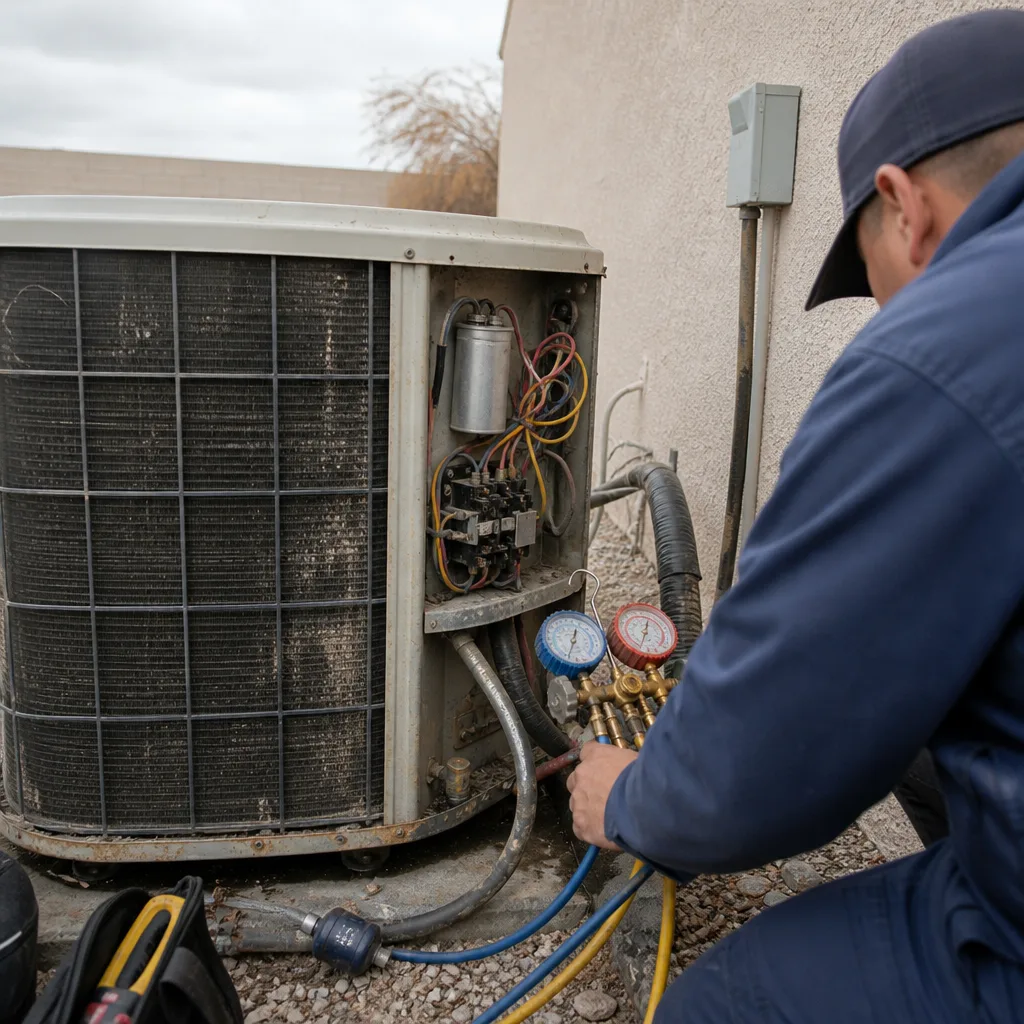 Before
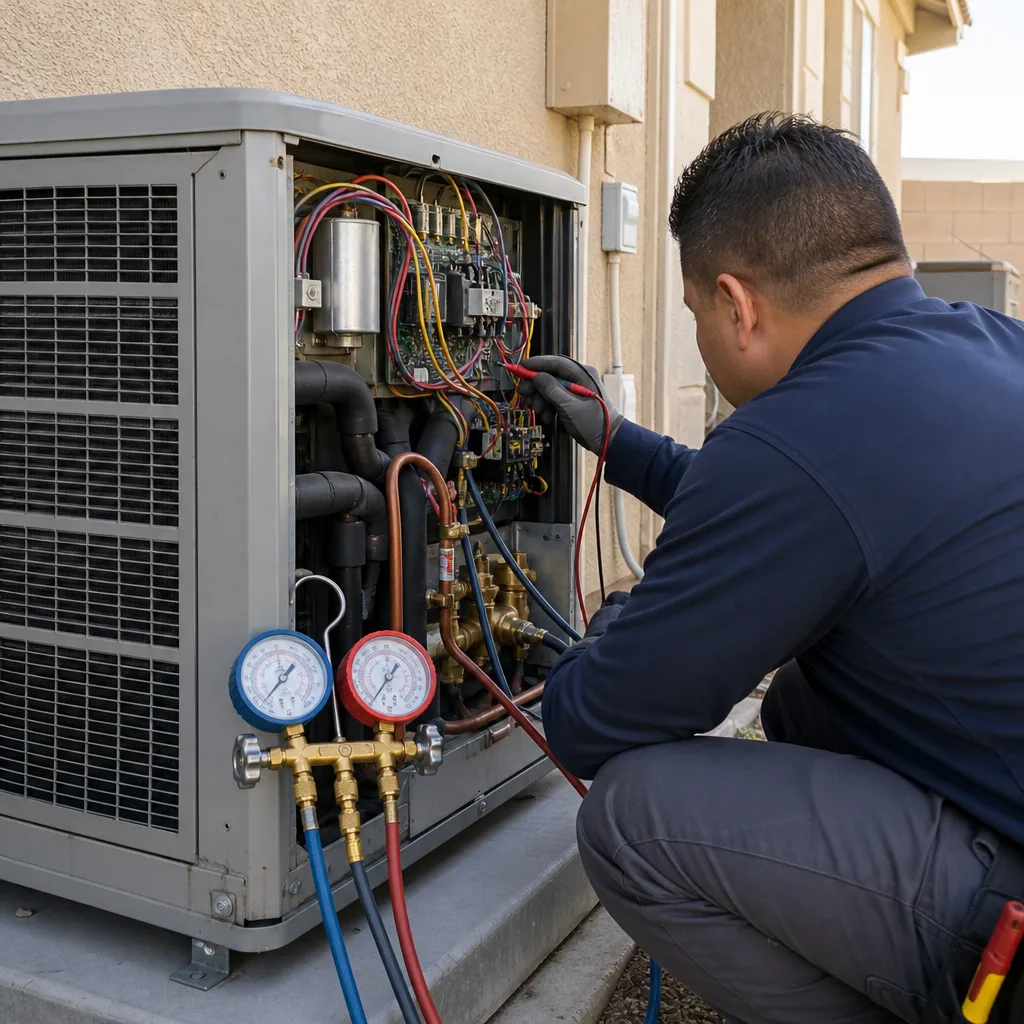 After
After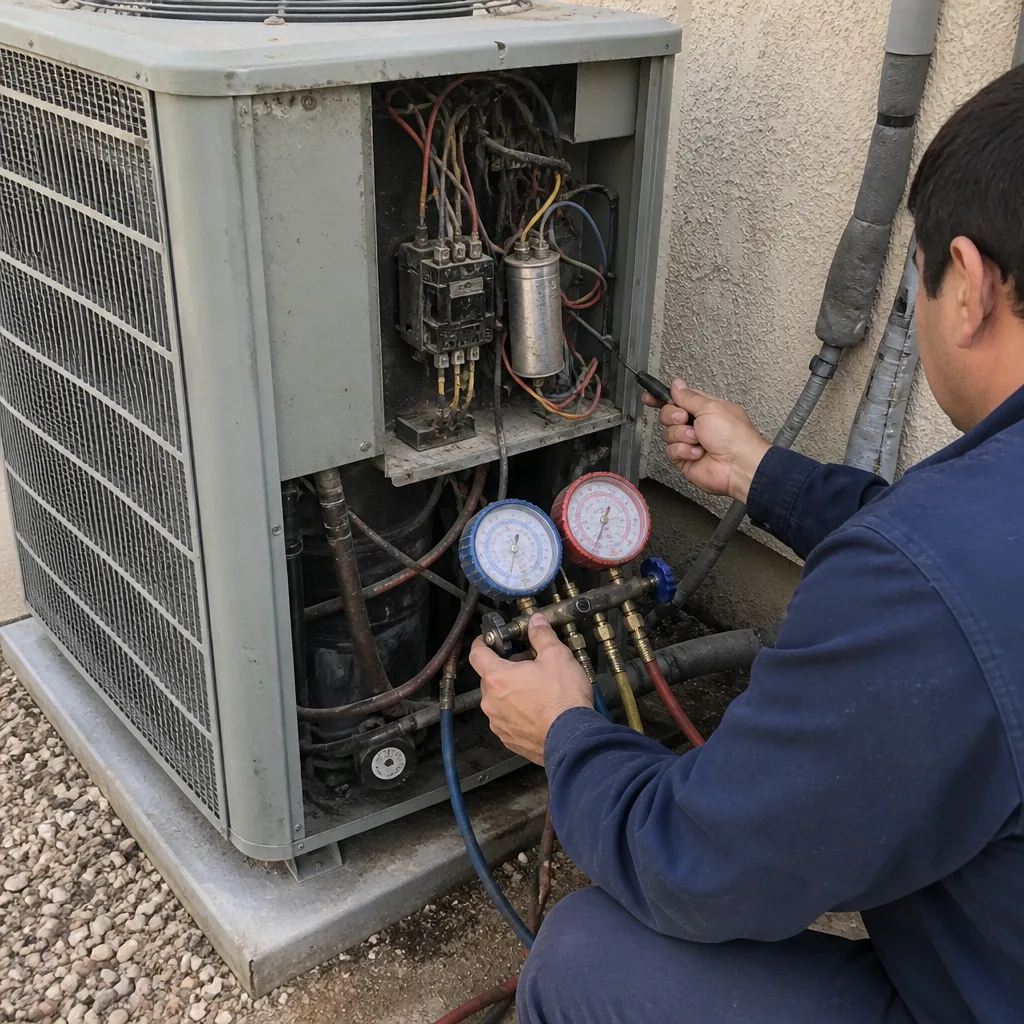 Before
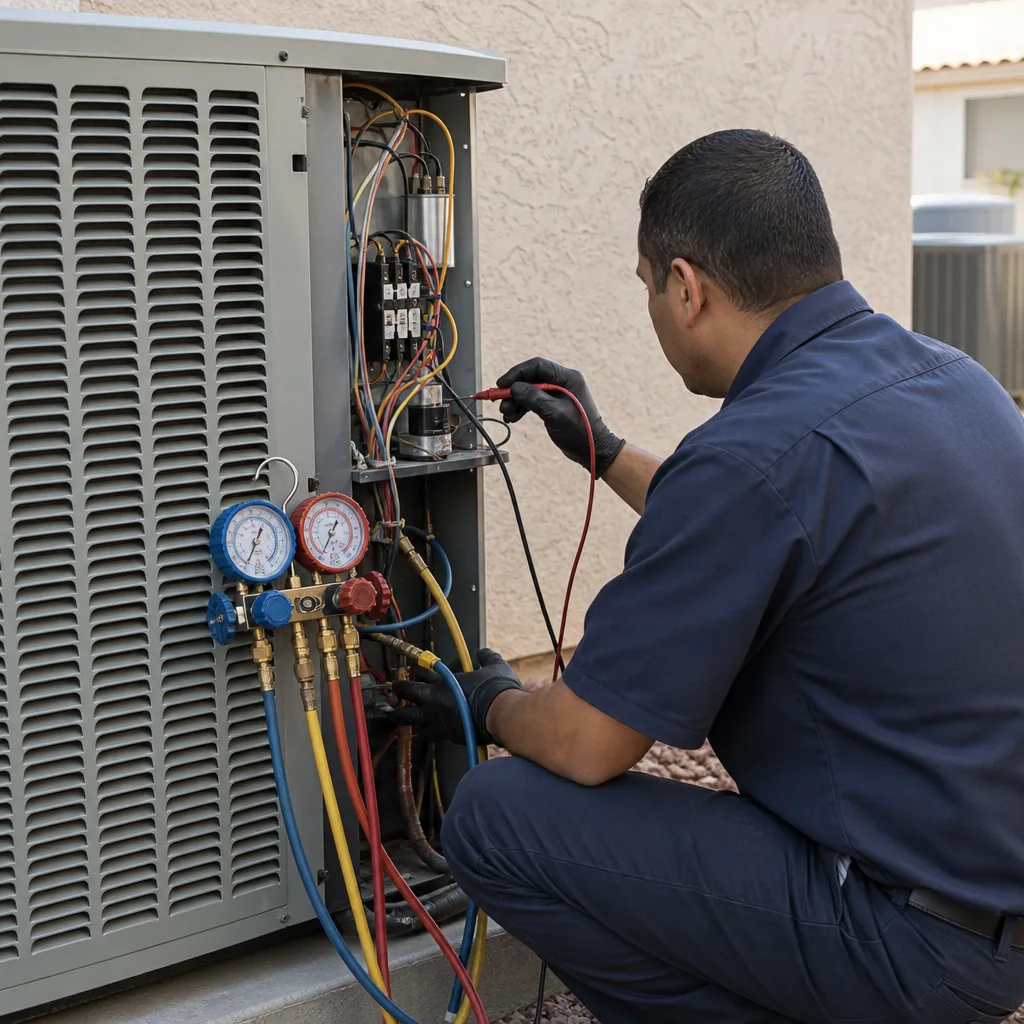 After
After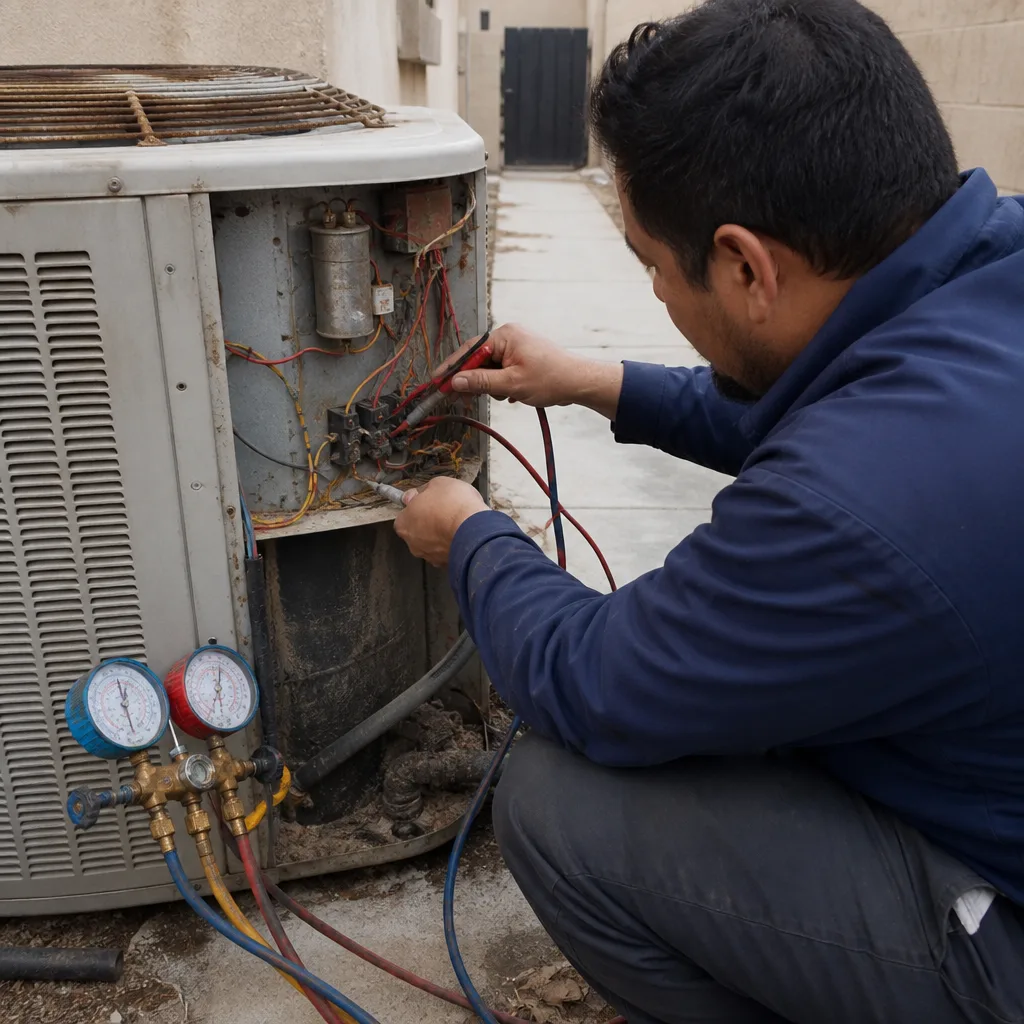 Before
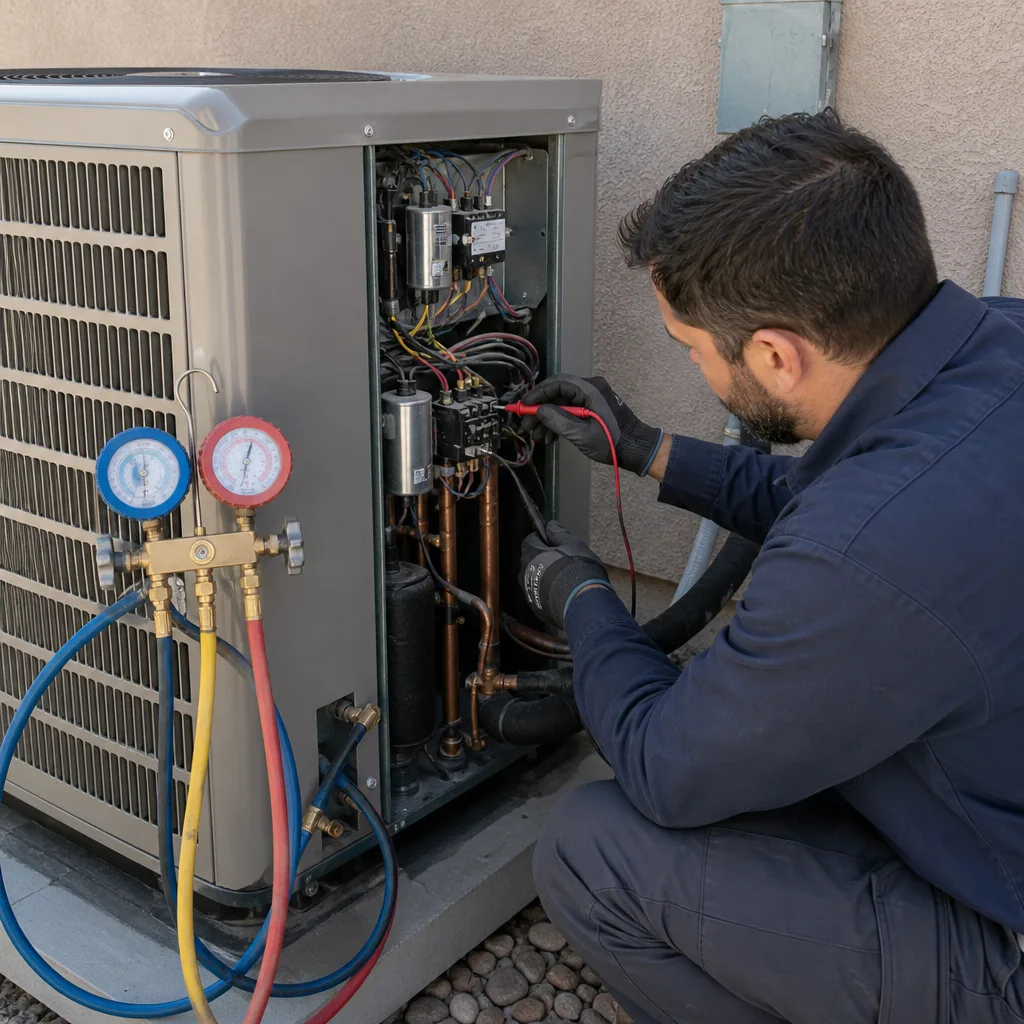 After
AfterWhen to Call a Professional
If you’re planning a system replacement, adding air conditioning to a home that never had it, or converting from evaporative cooling to refrigerated air, call a licensed contractor who will pull the permit, schedule the inspection, and give you the paperwork without you having to ask twice. The same applies if you’ve discovered unpermitted HVAC work during a sale or refinance, or if you cannot find a permit record for a system installed before you bought the house. Browse more guides & resources on protecting your investment.
Cold Harbour Heating and Air Las Vegas offers free estimates in Las Vegas and is glad to look up existing permit records at no charge before you commit to any project. Call (725) 726-3813 and tell us the address; we’ll let you know what we find and what the remedy will cost. We serve Las Vegas, Henderson, North Las Vegas, and the surrounding valley communities.
Frequently Asked Questions
Yes, you need a Clark County mechanical permit to replace an AC condenser or the entire cooling system in Las Vegas. The permit triggers an inspection that verifies the electrical disconnect, refrigerant line set, condenser clearance, and condensate drain. You can call (725) 726-3813 for an exact quote, and we’ll pull the permit as part of the job.
Unpermitted HVAC work in Nevada can void the equipment warranty, complicate insurance claims, and create a legal disclosure obligation when you sell the home. Clark County inspectors may require a retroactive permit, corrections to meet current code, and a re-inspection fee before the work gets approved. The total cost to remediate often runs $1,500 to $4,000 depending on what the inspector finds.
A residential mechanical permit for a furnace or AC replacement in Clark County typically costs between $150 and $450, with full-system and ductwork projects running $300 to $600. Henderson and North Las Vegas have similar fee schedules. The permit fee should appear as a line item on every written quote.
Yes, Nevada allows a homeowner to pull a permit for work on their own primary residence, which legally makes the homeowner the contractor on record. The catch is that all liability for code compliance, inspection, and future warranty claims becomes the homeowner’s. Most Las Vegas residents are better served hiring a licensed contractor who carries insurance and familiarity with Clark County inspectors.
A typical final mechanical inspection in Clark County takes 20 to 45 minutes on site, but scheduling varies from one to six business days depending on the season and the neighborhood. Summer is the busiest period. We schedule the inspection as part of every installation we complete in Las Vegas.
You can sell the home, but Nevada law requires sellers to disclose known unpermitted modifications, and many buyers’ lenders will require the permit issue to be resolved before closing. That means a retroactive permit, a county inspection, and any corrections needed to bring the system to code. Call (725) 726-3813 and we’ll check the existing permit history and give you a fixed price for any work needed.
The Bottom Line
Nevada’s HVAC permit rules are not optional, and they are not the contractor’s problem to bury. A permit is the legal record that your equipment was installed to code, which is what your manufacturer, your insurer, and your future buyer all expect. At Cold Harbour Heating and Air Las Vegas home, we put the permit fee in every written quote, pull the permit before the crew arrives, and don’t consider a job done until the county shows it finaled. When someone tells you the permit doesn’t matter, recognize the pattern: the person saying that is usually the one who doesn’t want to pull it.
Written by Victor Mancini, Owner at Cold Harbour Heating and Air Las Vegas, serving Las Vegas since 2003.