
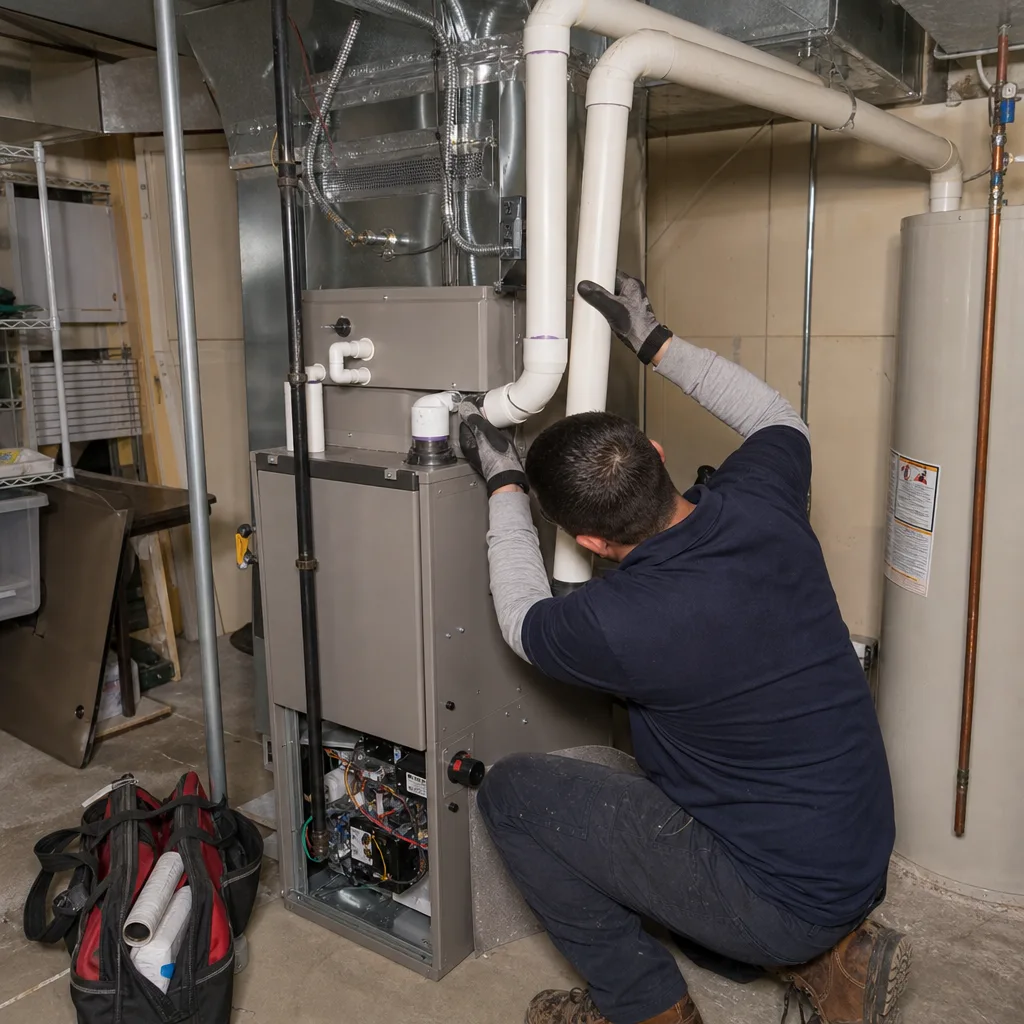
Last updated October 16, 2026
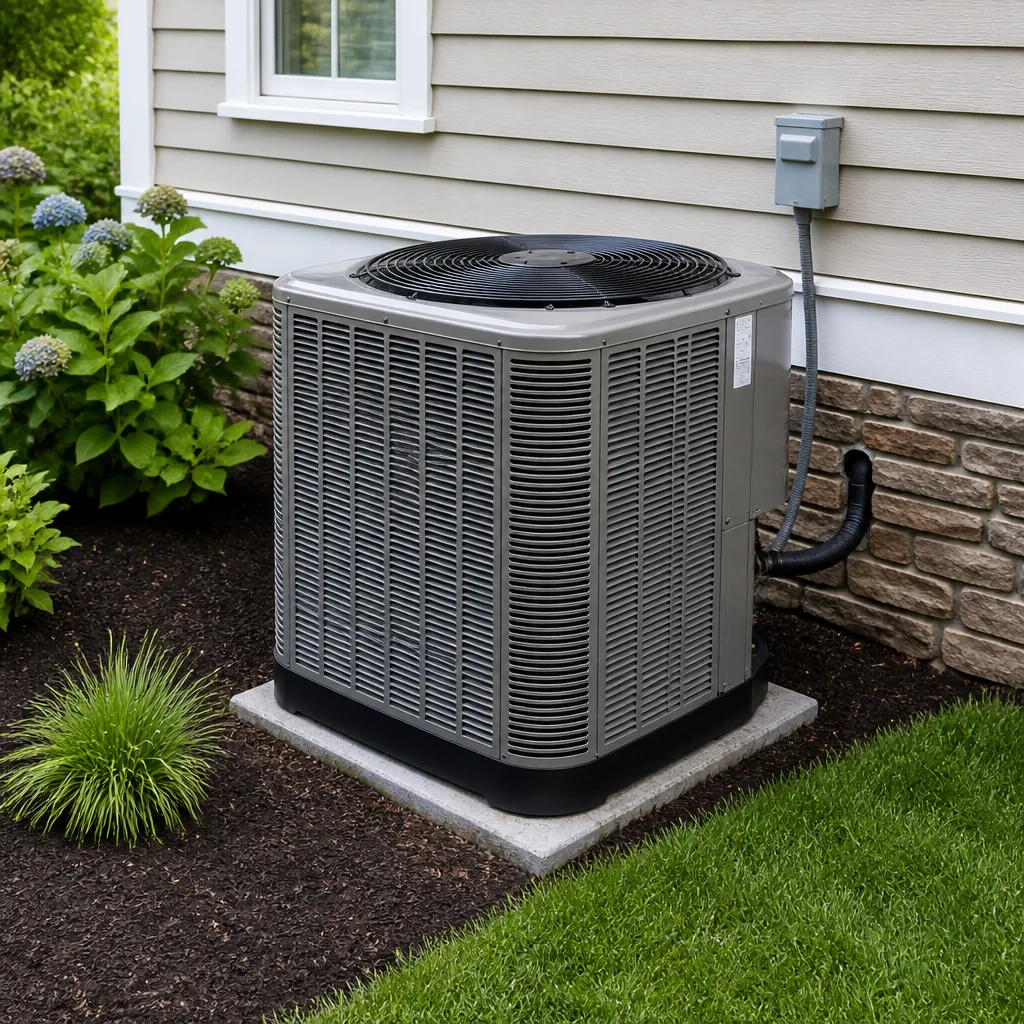 AC repair
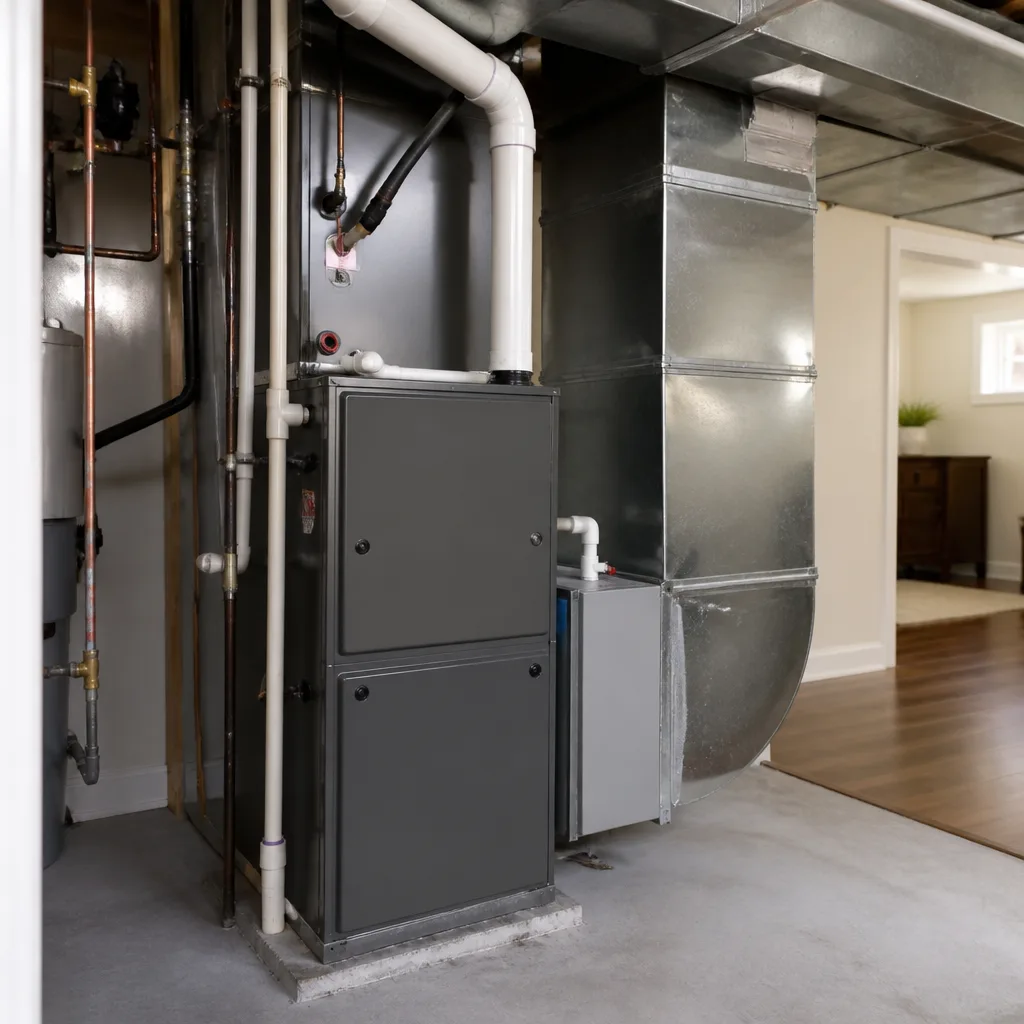 Furnace & heating
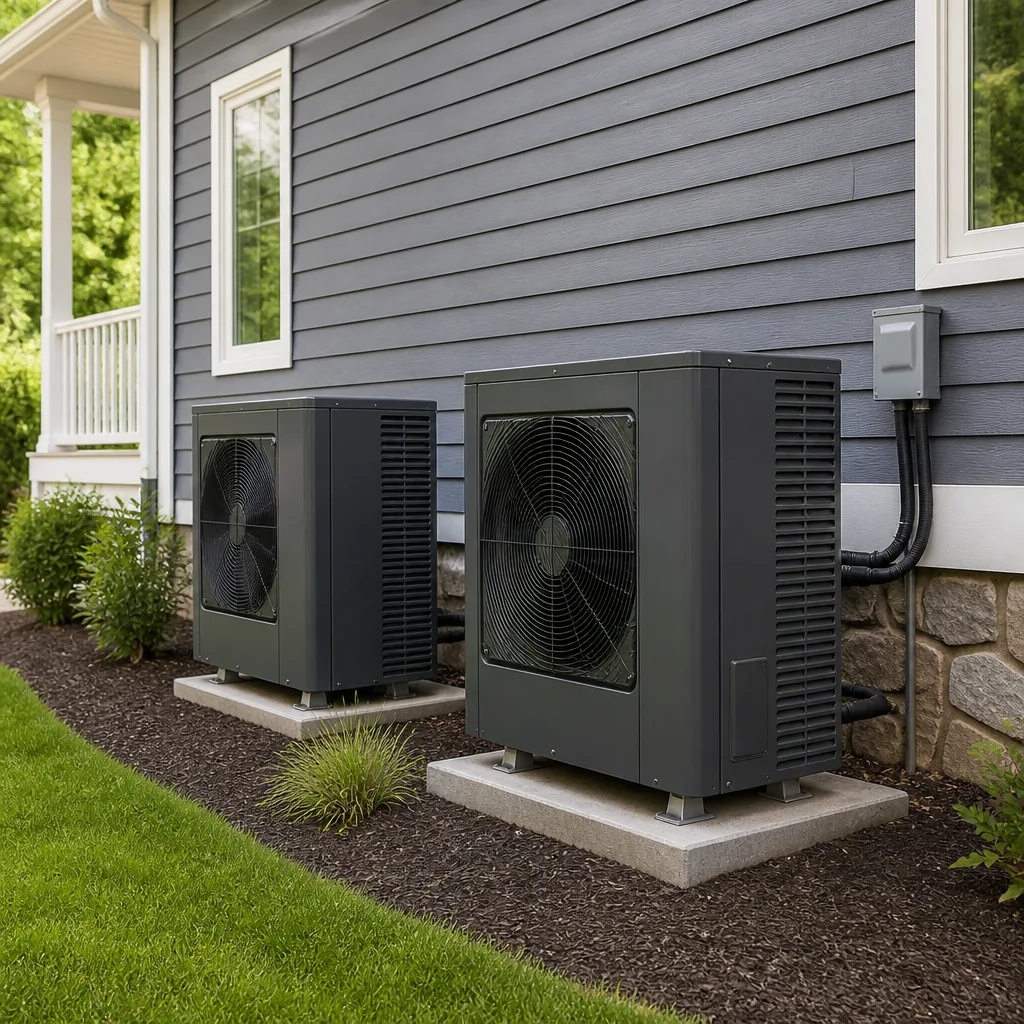 Heat pumps
 Ductless mini splits
 Carrier
 Trane
Trane Goodman
Seasonal tune-up and full diagnostic on your Carrier, Trane, or Goodman system - readings shown to you before any repair is proposed
Diagnosis first, numbers second - you approve the repair price before a single part goes in.
Get your free estimateAC Repair Maintenance Checklist for Las Vegas Homeowners
The single most common reason a Las Vegas air conditioner dies on the hottest day of the year isn’t a refrigerant leak or a seized compressor. It’s a $12 capacitor that a technician could have flagged during a spring maintenance visit. In Las Vegas, where summer temperatures routinely sit above 105°F and AC systems run 14 to 18 hours a day from June through September, small component failures become full system shutdowns fast. This guide walks through a maintenance checklist built specifically for Las Vegas failure data, not national averages, so you know exactly what to check, what to ask a technician to verify in writing, and what actually prevents a July emergency in this climate. For professional help, consider our AC Repair services.
Styles & brands we work with
Quick Answer
An AC maintenance checklist for Las Vegas homeowners should include monthly filter replacement during peak cooling months, a spring hard-start kit and capacitor inspection before temperatures climb, quarterly condensate drain flushing with an algae treatment, and a professional pre-summer tune-up that verifies refrigerant subcooling, compressor amp draw, and coil condition. The three tasks that actually prevent emergency calls in Las Vegas heat are hard-start kit inspection, condensate pan treatment for algae, and checking refrigerant subcooling at peak load, in addition to standard filter and coil cleaning.
Table of Contents
- Why Las Vegas AC Maintenance Is Different
- The Las Vegas Month-by-Month AC Maintenance Checklist
- Hard-Start Kit and Capacitor Inspection: The $12 Part That Prevents $400 Emergencies
- Condensate Drain Flushing and Algae Treatment: Why Las Vegas Lines Clog Faster
- Condenser Coil Cleaning in the Desert: Getting It Right Without Bending Fins
- What a Professional Tune-Up Should Include in Las Vegas (And How to Verify It)
- The $49 Tune-Up Special vs. Real Maintenance: A Line-by-Line Comparison
- Common Mistakes to Avoid
- When to Call a Professional
- Frequently Asked Questions
- The Bottom Line
Why Las Vegas AC Maintenance Is Different
Maintenance advice written for a national audience assumes your AC gets a break. It assumes moderate humidity, seasonal temperature swings, and a system that cycles off for hours at a time. None of that applies in Las Vegas. Our cooling season is not May to September, it’s March to November, and in peak summer a properly sized unit runs nearly continuously from late morning until after midnight. That means components that would last five years in Minneapolis might last three here, and a filter that would stay clean for 90 days in Portland can clog in 30 days during Las Vegas dust season. The maintenance checklist has to account for desert dust measured in microns, cottonwood blowing off the Spring Mountains, and nighttime temperatures that barely dip below 85°F, which means the condenser never truly rests.
We’ve also got hard water in most of the valley. Calcium and mineral scale build up faster in evaporator coils and condensate pans than in softer-water regions, and that scale acts as an insulator that cuts heat transfer. Add the fact that Las Vegas sits in a dry climate where homeowners run evaporative coolers or leave windows open in spring and fall, introducing fine silt into the home, and you have a set of operating conditions that no national checklist was ever written for.
The Las Vegas Month-by-Month AC Maintenance Checklist
Here’s what we recommend for Las Vegas homeowners, based on the actual climate calendar, with pre-summer prep starting in March, not May. For The Complete Guide to HVAC in Las Vegas, see our full resource.
March: Pre-Season Inspection
- Replace the air filter with a fresh MERV 8 to MERV 11 filter, and set a phone reminder for every 30 days through October.
- Turn the system on in cooling mode for a 20-minute test run before you actually need it, listening for any unusual hum, rattle, or short cycling.
- Inspect the outdoor condenser for debris, loose panels, and any damage from winter winds.
- Pour one cup of white vinegar into the condensate drain line to break up early mineral deposits before the real cooling load begins.
- Schedule a professional pre-season tune-up, ideally before the first 90°F day, before the demand rush makes it hard to get a same-week appointment.
April: Airflow and Drainage Verification
- Check the condensate drain line with the one-minute flush test described below, since April is when algae first becomes active around the standing water in the pan.
- Walk every room and confirm that supply registers are fully open and not blocked by furniture, rugs, or stored boxes that got shifted over the winter.
- Listen for the system short-cycling, where it turns on and off every five to ten minutes, which in Las Vegas is often the first sign of an overheating compressor or a failing capacitor.
- If you have a two-story home, check upstairs rooms individually; Las Vegas two-story homes commonly run 8 to 12 degrees warmer upstairs, and a duct damper adjustment now prevents August misery.
May through September: Peak Load Monitoring
- Replace the filter every 30 days, no exceptions, even if it doesn’t look dirty; fine desert clay and cottonwood dust clog the media before visible darkening.
- Once a month, inspect the outdoor coil surface for cottonwood fuzz, which collects on the condenser fins and chokes airflow by mid-June if unattended.
- Do the one-minute condensate flush each month, using either vinegar or a commercial condensate pan treatment, since during peak months the drain is handling several gallons of condensation daily.
- Listen for any new sound coming from the outdoor unit, particularly a hard start thump or a buzzing contactor, and call for a service visit if it develops rather than waiting for a failure.
October: Post-Season Wrap
- Run one final cooling cycle and note whether the system reaches the set point efficiently, because this is the cheapest time to detect weak performance before next year.
- Turn the system to heat or off depending on your setup, and inspect the outdoor unit for any rodent damage since desert pack rats are known to nest inside condenser cabinets in fall.
- Clean or replace the filter one last time for the cooling season and note the date, so there’s a clean baseline for spring.
- Consider applying a light outdoor coil cleaner while the weather is mild, but only if you can do so without bending fins, as described below.
Hard-Start Kit and Capacitor Inspection: The $12 Part That Prevents $400 Emergencies
In Las Vegas, we see capacitor failures as the leading cause of no-cool calls in July and August, and the signs are often visible in March if someone knows to look. A capacitor is a cylindrical component inside the outdoor unit that stores and releases the electrical jolt needed to start the compressor and fan motor. When it weakens, the compressor tries to start, draws locked-rotor amperage, overheats, and trips the internal thermal overload. The homeowner hears the outdoor unit humming but not running, and by then the component has already failed, often on the hottest afternoon when the system is under maximum strain.
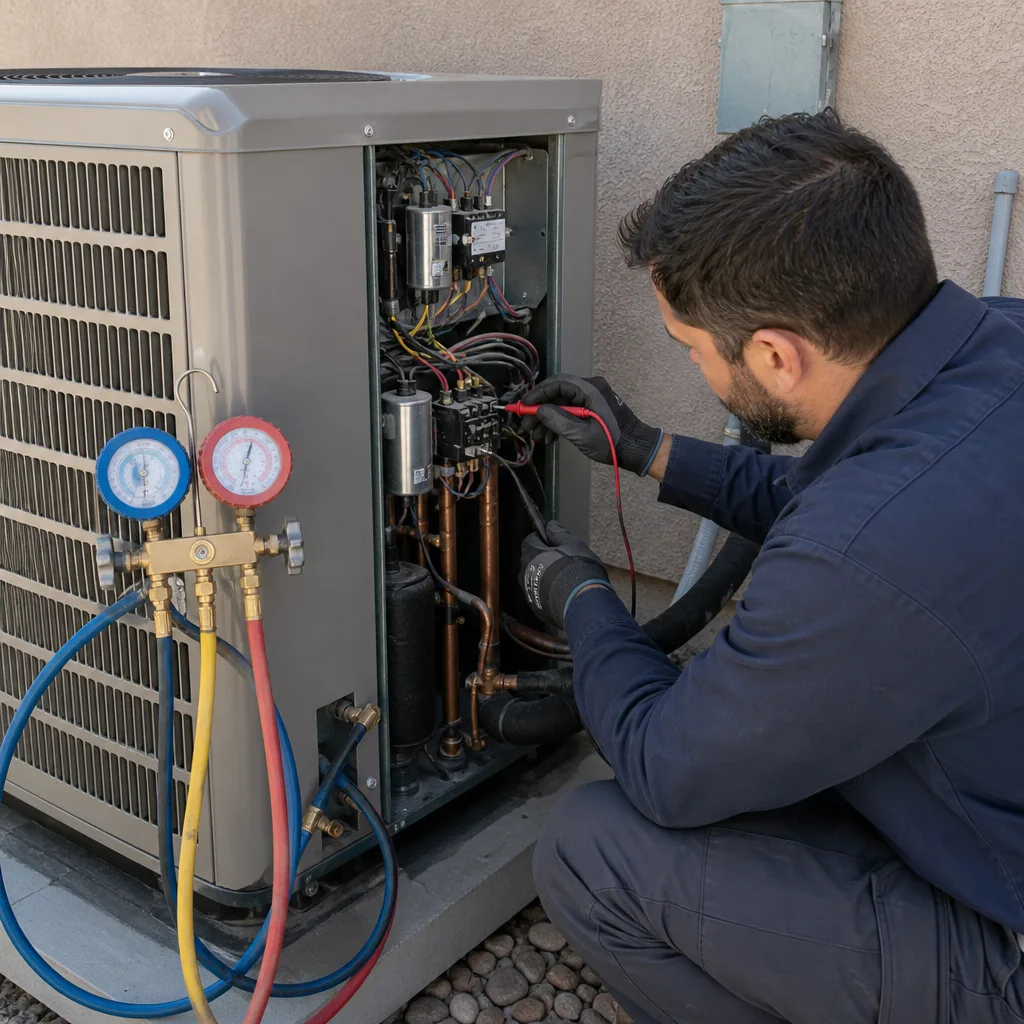
A hard-start kit is a secondary capacitor and relay wired in parallel that gives the compressor an extra starting boost and reduces the starting current draw by up to 50%. In the Las Vegas market, where dozens of compressor failures each summer trace back to years of high-temp, high-load starting without a hard-start assist, we recommend a hard-start kit for essentially any single-stage AC over eight years old, and for any unit that has already had one capacitor replaced. On a maintenance visit, a technician can test capacitor microfarad (MFD) values with a multimeter in under five minutes, and that single test is the difference between a $12-to-$40 part replaced on schedule and a $350 to $600 emergency repair plus the cost of a hot night in the house.
Homeowners can’t safely test capacitor values themselves, and we don’t recommend opening the condenser cabinet because the capacitor holds a stored charge even with the power off. But you can listen. A compressor that struggles to start, makes a repeated clicking sound, or causes a brief dimming of lights when it kicks on is a genuinely useful warning sign to report to a technician. When AC repair in Las Vegas calls come in for hard-start symptoms, the fix is typically a same-day capacitor replacement, and if a hard-start kit is added at that point, the system often runs years longer.
Condensate Drain Flushing and Algae Treatment: Why Las Vegas Lines Clog Faster
It surprises many Las Vegas homeowners that condensate lines clog here despite the dry climate, but our desert conditions actually create three specific clog conditions that humid climates don’t see. First, airborne dust, cottonwood, and construction silt get pulled into the indoor air stream, condense onto the evaporator coil, and wash down into the drain pan as a fine mud. Second, that mud provides a growth medium for the same algae and biofilm you’d expect in a humid climate, because the inside of a condensate pan is the one consistently wet environment in the entire Las Vegas home. Third, our hard water contributes mineral scale that narrows the inside surface of the drain line, so even a modest algae bloom bridges the gap and plugs the line completely.
The one-minute flush test any homeowner can do themselves: locate the condensate drain line outlet, typically a PVC pipe exiting near the indoor air handler or on the exterior wall by the condenser. Remove the cap or cleanout plug if there is one, pour one cup of white vinegar or a commercial condensate line treatment down the line, and watch the outlet. If the liquid flows freely and exits the pipe within about 30 seconds, the line is clear. If it pools at the opening, drains slowly, or does not exit, the line is partially clogged and needs a wet-dry vac or professional flush before it backs up and trips the float switch, which on many Las Vegas systems shuts the AC down entirely as a water-damage safety.
In our experience with systems here in the valley, monthly flushing during peak cooling season is the single highest-impact homeowner preventive task, because a clogged drain is one of the few AC failures that damages more than the AC, it soaks the ceiling, drywall, or carpet around the air handler.
Condenser Coil Cleaning in the Desert: Getting It Right Without Bending Fins
In Las Vegas, the outdoor coil is a magnet for cottonwood, dust, and the fine tan silt that blows in from open desert, especially in neighborhoods near Summerlin’s western edge or any newer development where construction is still active. When that debris layer builds on the coil face, it insulates the coil from outside air and drives condenser head pressure up, which pushes the compressor harder and pulls more amps. A dirty coil in Las Vegas can add 15 to 25 percent to a cooling bill by August, and it shortens compressor life measurably.
Here’s the step-by-step process for how to inspect and clean the coil, along with the point where cleaning makes things worse.
- Turn the system off at the thermostat, then also at the breaker or outdoor disconnect switch.
- Visually inspect the coil surface. Look for cottonwood fuzz, a visible dirt blanket, or patchy darkened areas where airflow is restricted.
- Brush the surface lightly with a soft-bristle brush, a clean paintbrush, or a dedicated coil brush, moving in the same direction as the coil fins, which are vertical on most modern units. Never brush across the fins, because the thin aluminum fins bend under the slightest sideways pressure and bent fins are themselves an airflow obstruction that reduces the whole point of cleaning.
- Rinse with a garden hose using only moderate pressure and a spray nozzle set to a fan or shower pattern, not a jet. Spray from the inside out when possible, because spraying from the outside in pushes the debris deeper into the coil matrix. Keep the spray angled straight on, not sideways, to avoid folding fins.
- If the coil is still dirty after a water rinse, use a foaming coil cleaner labeled safe for aluminum fins. Avoid acidic cleaners or anything labeled for evaporator coils indoors. Rinse thoroughly with the hose.
- Allow the coil to dry, check the fin condition with a flashlight, and if you see more than a few bent fins per square foot, or a flattened patch where water pressure or brushing folded the aluminum, stop and call for professional fin straightening. Cupping and folding at this point has already reversed some of the cleaning benefit, and continuing makes it worse.
This is entry-level work for a homeowner who takes the time, but the desert-specific catch is that cottonwood season runs late May into early June, so a coil cleaned in April can already be half-clogged by mid-June. Cold Harbour Heating and Air Las Vegas home technicians see this every year, and the realistic guidance is: clean it in April, then check again in June and August, because in Las Vegas, a once-a-season coil cleaning doesn’t hold.
What a Professional Tune-Up Should Include in Las Vegas (And How to Verify It)
A real maintenance visit in Las Vegas is measurable work, and after the technician leaves, you should have specific numbers on paper, not just a checkbox that says “inspected system.” Here’s what a legitimate tune-up covers and what to ask for in writing.
- Refrigerant subcooling or superheat measurement: The technician should measure and record the actual subcooling value for a TXV system, or superheat for a piston system, in degrees Fahrenheit, and compare it to the manufacturer’s stamped target on the condenser data plate. In Las Vegas, we recommend this check happens at the evaporator and condenser in the afternoon, at as close to outdoor design temperature (about 107°F for Las Vegas) as possible, because a system that is charged correctly at 85°F outside can be measurably undercharged at 107°F. If the technician will not write down the measured value, that is a red flag.
- Compressor amp draw and capacitor MFD readings: The tech should record compressor running amps and capacitor microfarad values, and compare them against the rated values on the equipment label. A capacitor reading 10 percent below the rated MFD is a part that should be replaced during maintenance, not after it fails.
- Temperature drop (Delta T) across the evaporator coil: The tech should measure return air temperature and supply air temperature and record the difference. For a properly working residential AC in a dry climate like Las Vegas, Delta T typically falls in the 16°F to 22°F range. Numbers lower than that suggest airflow or charge problems, and numbers higher can indicate a frozen coil in humid shoulder season.
- Condenser coil cleaning and fin inspection: Done with water or a proper coil cleaner as described above, and not skipped as “visually clean.”
- Drain line flush, condensate pan inspection, and pan treatment: The pan should be cleaned, and an algae-inhibiting pan treatment tablet or strip should be placed in the pan. Ask to see it before the tech leaves.
- Electrical connection torque and contactor inspection: Loose lugs and pitted contactors are part of the failure chain for capacitor and compressor damage, and in Las Vegas heat, resistance from a loose connection compounds quickly.
- Airflow measurement and filter check: Static pressure should be measured with a manometer on a real maintenance visit. A static pressure reading above about 0.5 inches of water column typically means a duct restriction or an over-restrictive filter, and that excess pressure shortens motor life.
If a “tune-up” includes only an outdoor coil rinse and a filter change but no recorded measurements, it is closer to a courtesy visit than a maintenance appointment. For homeowners who want real documentation, ask for the recorded numbers in writing before the tech packs up, and keep them year over year. A declining capacitor MFD reading or a slowly falling Delta T across two seasons is early evidence of a problem that can be fixed on your schedule instead of as a July emergency.
The $49 Tune-Up Special vs. Real Maintenance: A Line-by-Line Comparison
Las Vegas is full of $49 tune-up offers, and they work as lead generators for a reason. But when you compare them item by item against what a real maintenance visit requires, the difference is not the price, it’s the scope. Here is the honest line-by-line comparison.
| Task | $49 Tune-Up Special | Real Maintenance Visit |
|---|---|---|
| Filter inspection or replacement | Usually included, sometimes an add-on | Included, with airflow verification |
| Outdoor coil rinse | Often a quick hose-down | Full cleaning with fin inspection |
| Refrigerant subcooling/superheat measurement | Rarely included, often quoted as an add-on | Included, measured and recorded in writing |
| Capacitor and contactor testing | Often skipped or only visual | Tested with a multimeter, values recorded |
| Compressor amp draw | Usually skipped | Measured and compared to rating plate |
| Delta T temperature drop | Usually skipped | Measured at return and supply, recorded |
| Drain line flush and pan treatment | Sometimes a quick visual check | Flushed, cleaned, treatment applied |
| Hard-start kit assessment | Almost never included | Evaluated, recommended for older systems |
| Static pressure and airflow measurements | Rarely included | Measured, duct restrictions flagged |
| Written report with specific values | Often a checklist with no numbers | Full written record of all measurements |
The $49 visit usually takes 30 to 45 minutes and is designed to find a repair. A real maintenance visit takes 60 to 90 minutes on a typical residential split system and is designed to find problems early. We don’t discount either approach categorically, because a low-priced visit that includes real measurements is a bargain, but if the $49 price is the headline and no one can tell you which measurements they take, the visit is not going to prevent a July failure.
Common Mistakes to Avoid
- Waiting until May to schedule maintenance: Most Las Vegas homeowners wait until the first heat wave, then call every HVAC company at once. By then, the best technicians are booked a week out, and you’re paying emergency pricing on top of maintenance work. March scheduling is the single best cost-saving move a Las Vegas homeowner can make.
- Replacing the filter on a national schedule: A filter that works for 90 days in a humid, mild climate can be fully loaded with fine desert clay in 30 days here. During June through September, check the filter monthly and replace it whenever it’s visibly loaded, not when the package says to.
- Ignoring a short-cycling system because it still cools: If your AC turns on and off every few minutes, that’s not normal operation. In Las Vegas, short cycling is often the early signature of an overheating compressor, a failing capacitor, or an oversized system, and all three are cheaper to address before the unit quits entirely.
- Skipping the condensate line flush because the pan looks dry: The pan may look dry while the line is narrowed by mineral scale and biofilm. You won’t know until the line plugs, the float switch trips, and the system shuts down; the one-minute vinegar flush is cheap insurance.
- Cleaning the condenser coil with a pressure washer: High-pressure spray folds the thin aluminum fins over flat, and a coil with flattened fins pulls less heat out of the refrigerant than a dirty coil. Use a garden hose on a fan setting or call a pro.
- Assuming a tune-up is complete because the tech said everything looks good: Visual checks catch maybe a third of pending failures. A recorded capacitor MFD value, a measured Delta T, and a subcooling number in writing are the proof that the visit was actually maintenance, not just a courtesy call.
- Running the system for weeks with a refrigerant leak instead of repairing it: In Las Vegas heat, an undercharged system runs constantly and still loses the battle by mid-afternoon, and it’s burning more power while doing it. Leaks do not heal, and the faster they’re repaired, the less total refrigerant the system needs.
When to Call a Professional
Some AC issues are safe to monitor and some are not. Call a licensed technician when the outdoor unit hums but won’t start, when the breaker trips more than once, when you see ice on the refrigerant lines or indoor coil, when the air blowing from the registers feels warm on a hot day, or when the system is running continuously and the house won’t hold temperature. These specific symptoms indicate an electrical fault, a refrigerant issue, or a component under extreme stress, and in Las Vegas summer heat, a system that fails on Saturday afternoon can leave a house at 95°F by evening. Cold Harbour Heating and Air Las Vegas offers free estimates in Las Vegas. Call (725) 726-3813 and a live person answers, any hour, any day.
Frequently Asked Questions
Every 30 days during peak cooling season, from May through September. Las Vegas desert dust and cottonwood load a filter far faster than national guidelines assume, and a loaded filter starves the blower and the evaporator coil of airflow, which reduces cooling and raises operating cost. Change it monthly in peak season and every 60 days the rest of the year.
A real maintenance visit in Las Vegas typically runs $129 to $249 for a single system, depending on the thoroughness of the inspection and the measurements included. A basic $49 to $79 tune-up special is usually a shorter, less thorough visit that doesn’t include refrigerant measurements or capacitor testing. Call (725) 726-3813 for an exact price on a full maintenance visit, with no obligation.
You can do a basic rinse, brush, and foaming coil cleaner application yourself as long as you use low water pressure, brush with the fins, and straight-on spray, but a technician should handle fin straightening and any coil that’s been painted, damaged, or heavily impacted. Not sure whether to DIY? Read our DIY vs Professional HVAC: The Las Vegas Homeowner’s Decision Guide. If your coil was cleaned by a pressure washer or you can see more than a few crushed fins per square foot, call a professional before the airflow restriction gets worse.
Las Vegas dust and silt wash off the evaporator coil into the condensate pan, where they mix with water and form a mud that feeds algae and mineral scale, and the line narrows over time. The one-minute flush test with white vinegar, done monthly in cooling season, clears most of it. If the line plugs repeatedly or the pan treatment isn’t holding, there may be a low spot or a collapsed section in the drain line that needs a professional repair.
Capacitor failure. The capacitor gives the compressor and fan motor their starting jolt, and in Las Vegas heat, the part degrades faster than in cooler climates. A capacitor that tests weak in March can be replaced for a small parts cost before summer, but the same part that fails on a 110°F afternoon becomes an emergency repair with a hot night attached.
A system under 10 years old with a single failed part and no history of frequent repairs is usually worth repairing, while a system over 12 to 15 years old with a compressor or coil failure, especially one using the old R-22 refrigerant, is often a better candidate for AC installation in Las Vegas than another repair. The math shifts fast in Las Vegas because the cooling load is so extreme, and a new high-efficiency system can cut a July electric bill meaningfully. Call (725) 726-3813 for an honest repair-versus-replace assessment, with the price in writing before any work starts.
The Bottom Line
Las Vegas AC maintenance is not a national checklist problem, it’s a desert failure-data problem. The tasks that actually keep your system alive through July are hard-start kit and capacitor inspection, monthly condensate drain treatment, and a measured, documented tune-up that records subcooling, amp draw, and Delta T in writing. Spring maintenance in March beats emergency repair in August every time, and it costs a fraction of a same-day repair. Do the monthly checks, get the numbers on paper, and when something does go wrong, you’ll have a baseline to work from instead of a guess. For more guides & resources, visit our blog.
Written by Victor Mancini, Owner at Cold Harbour Heating and Air Las Vegas, serving Las Vegas since 2003.
See the difference
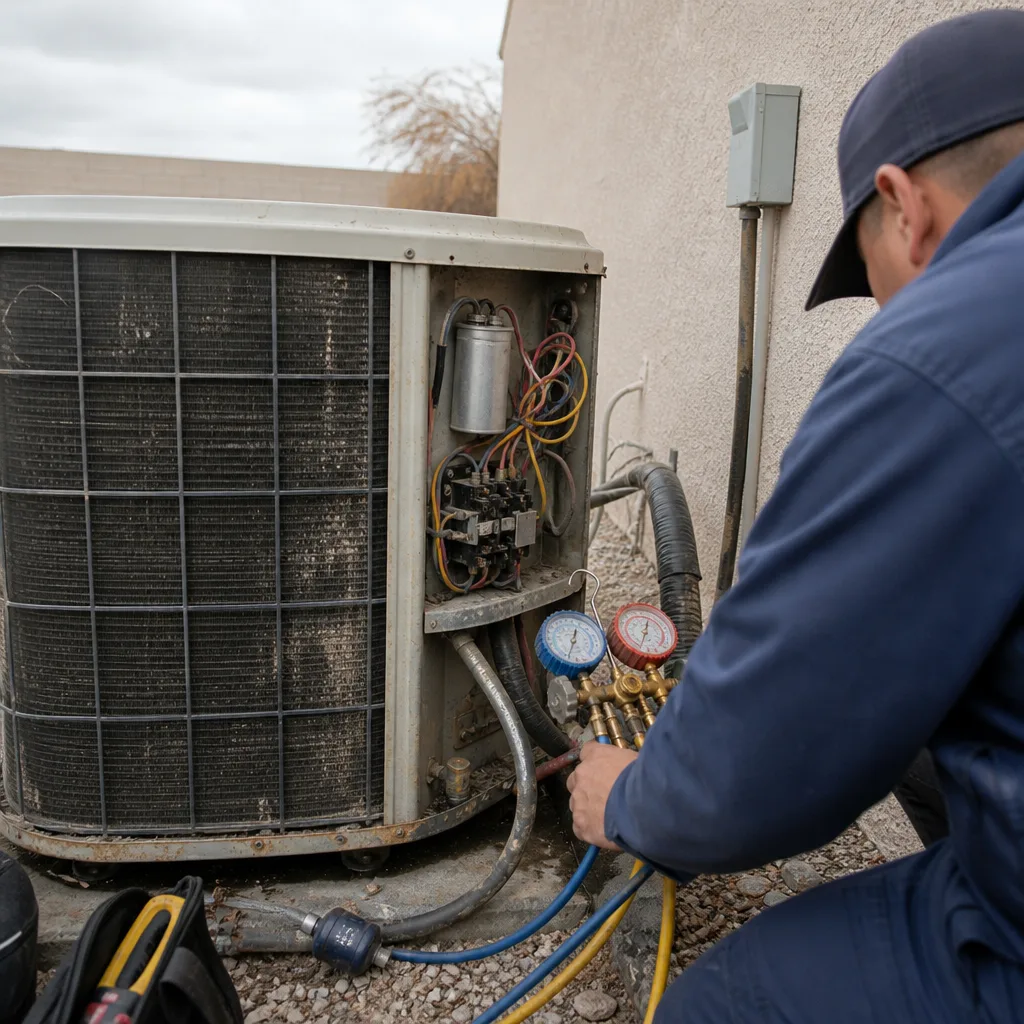 Before
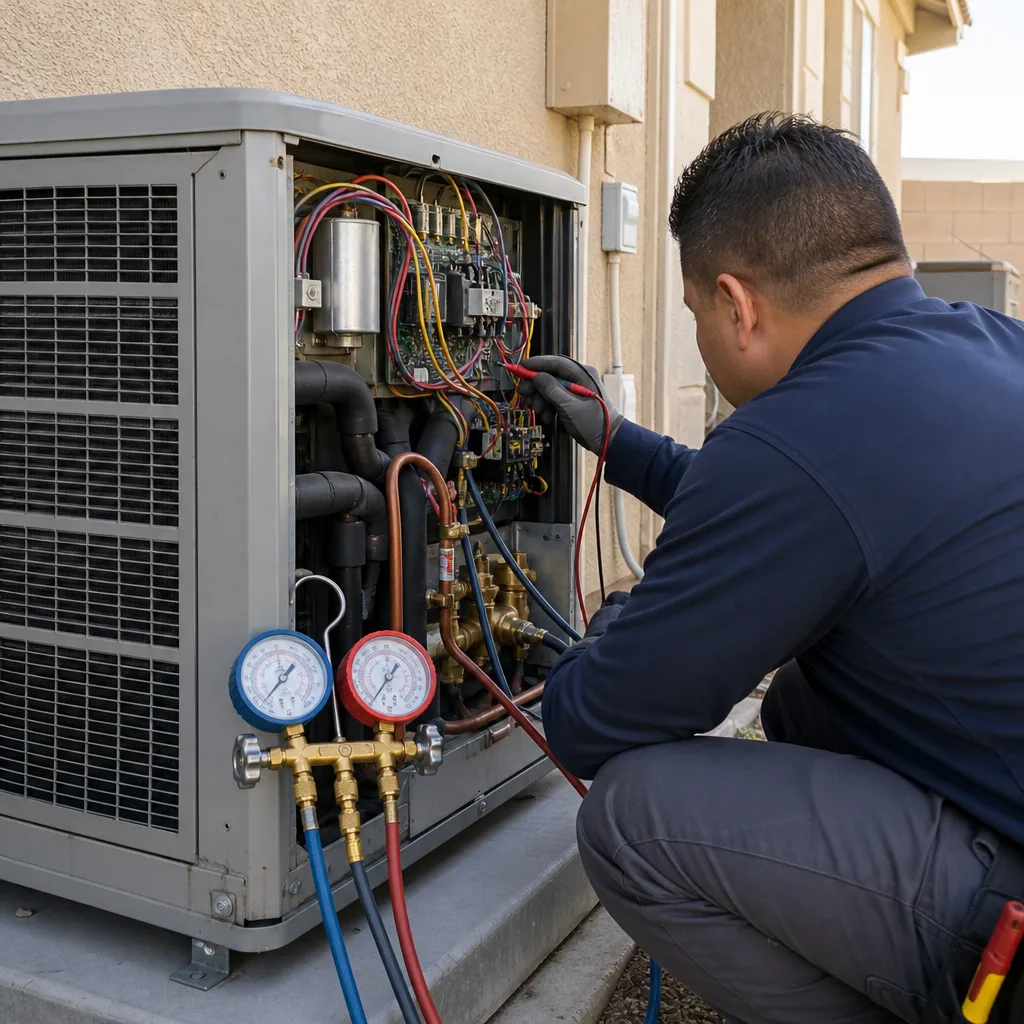 After
After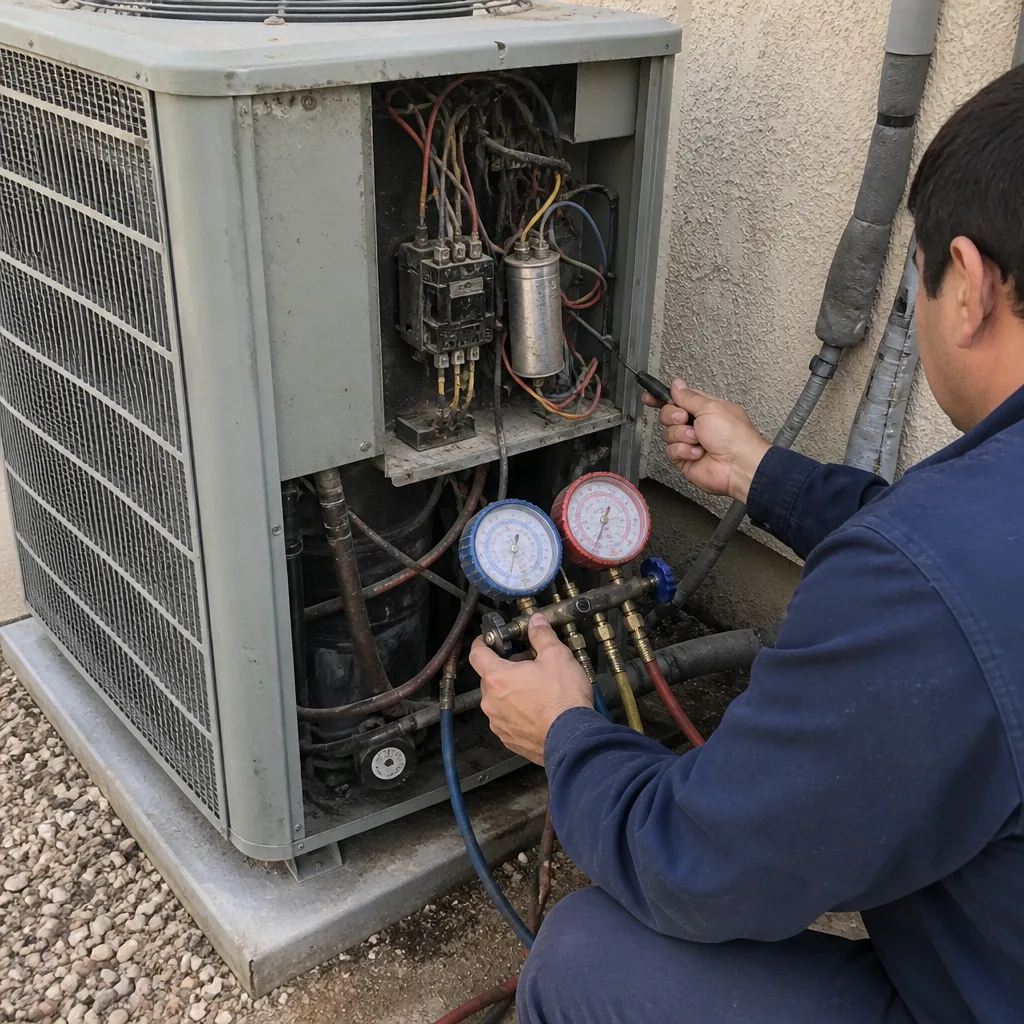 Before
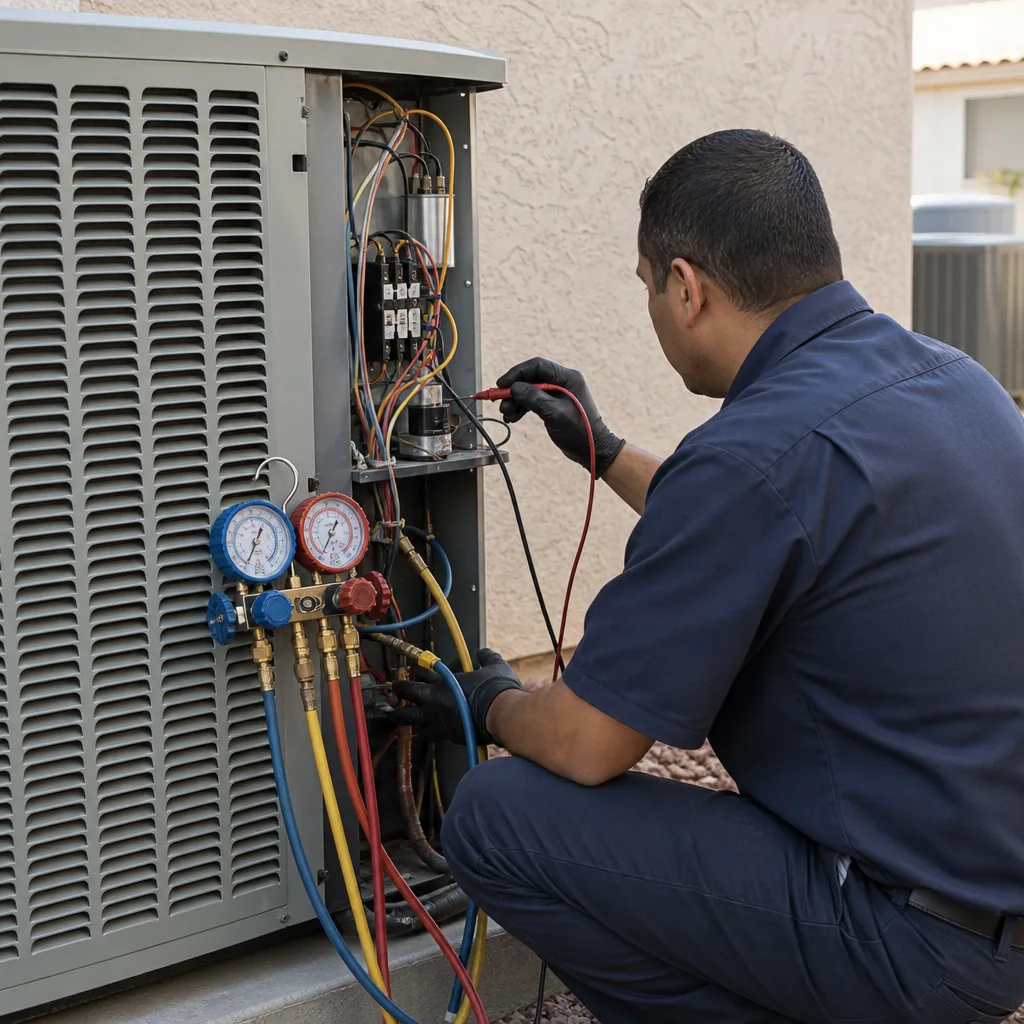 After
After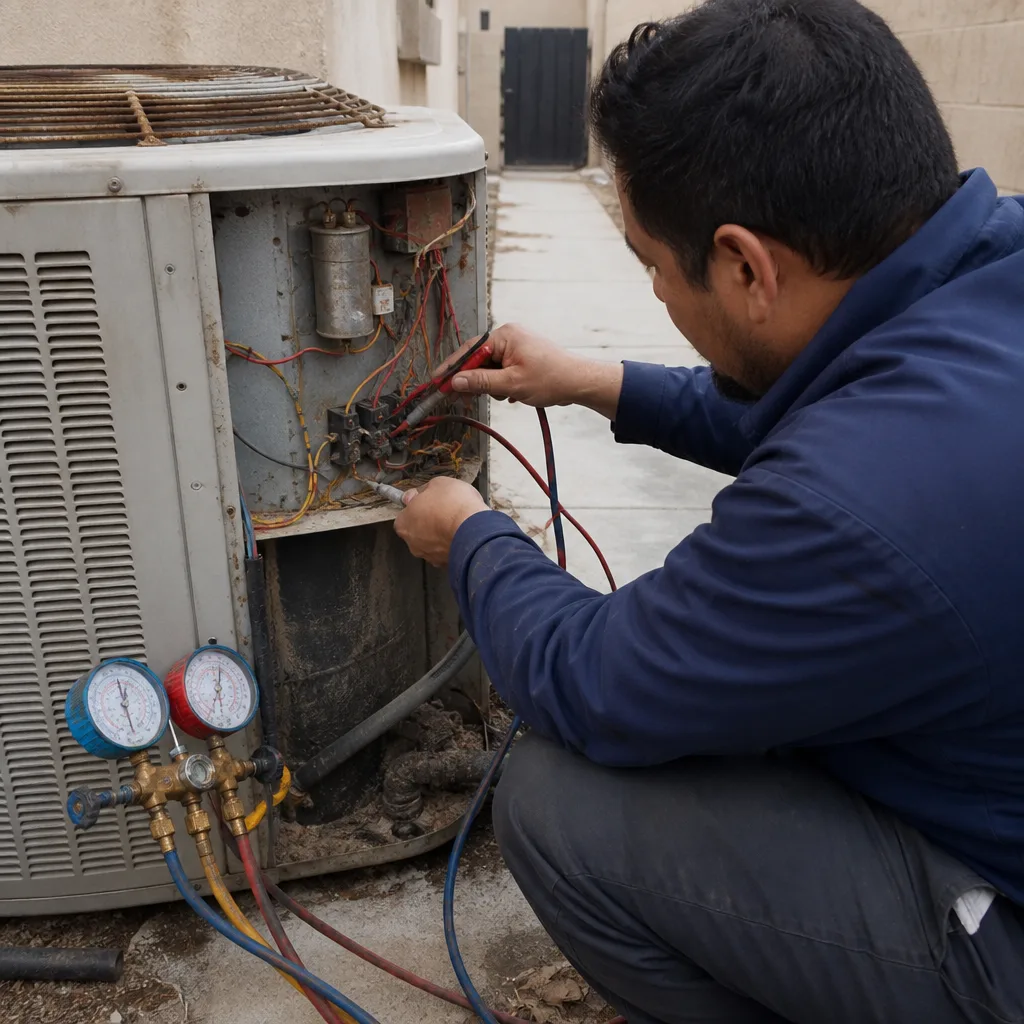 Before
 After
After