
Last updated October 16, 2026
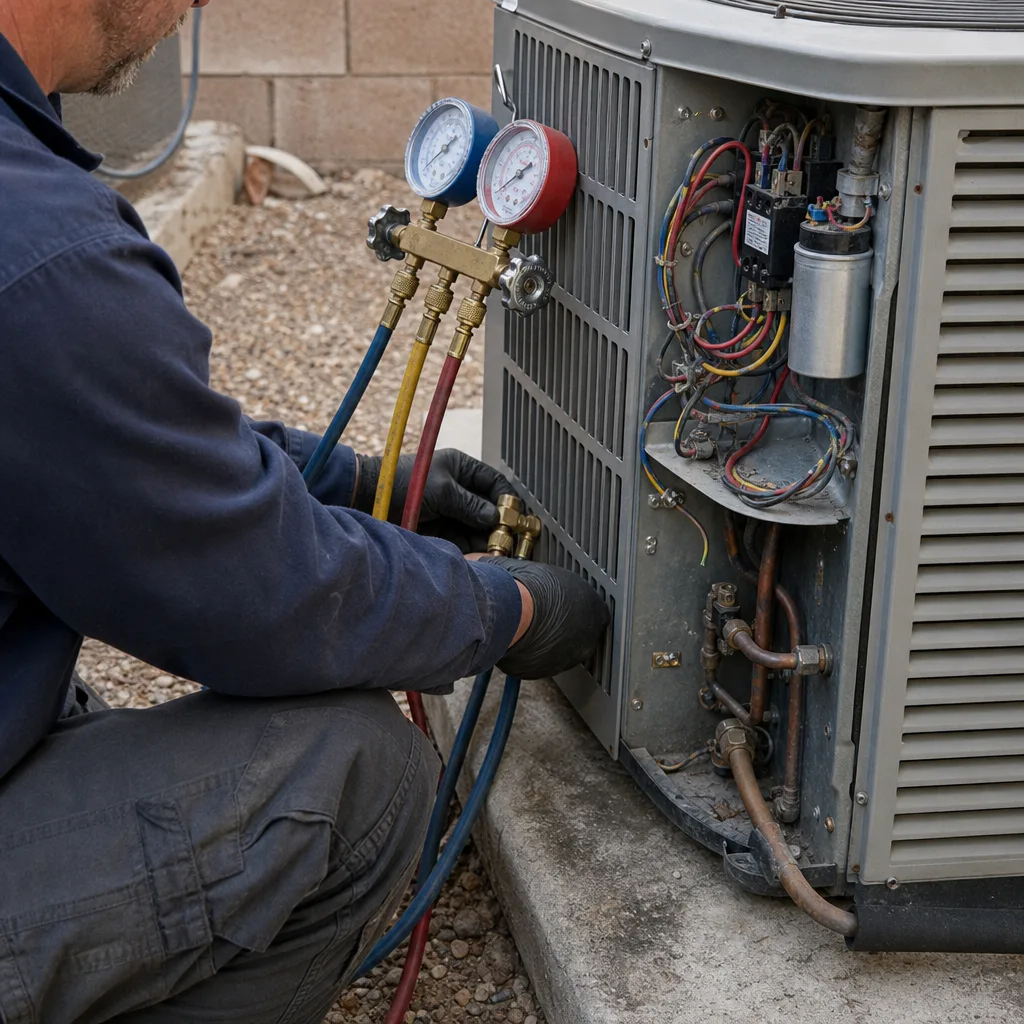
 AC repair
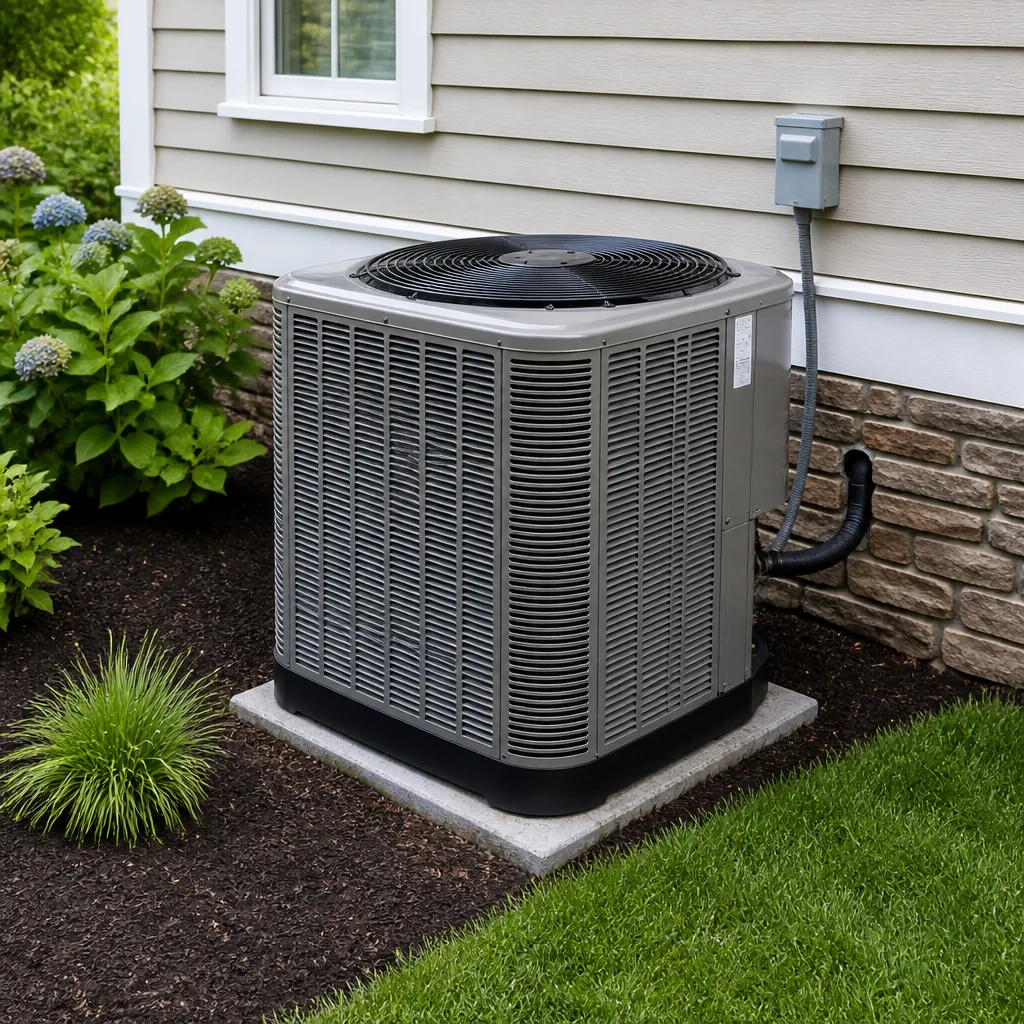
 Furnace & heating
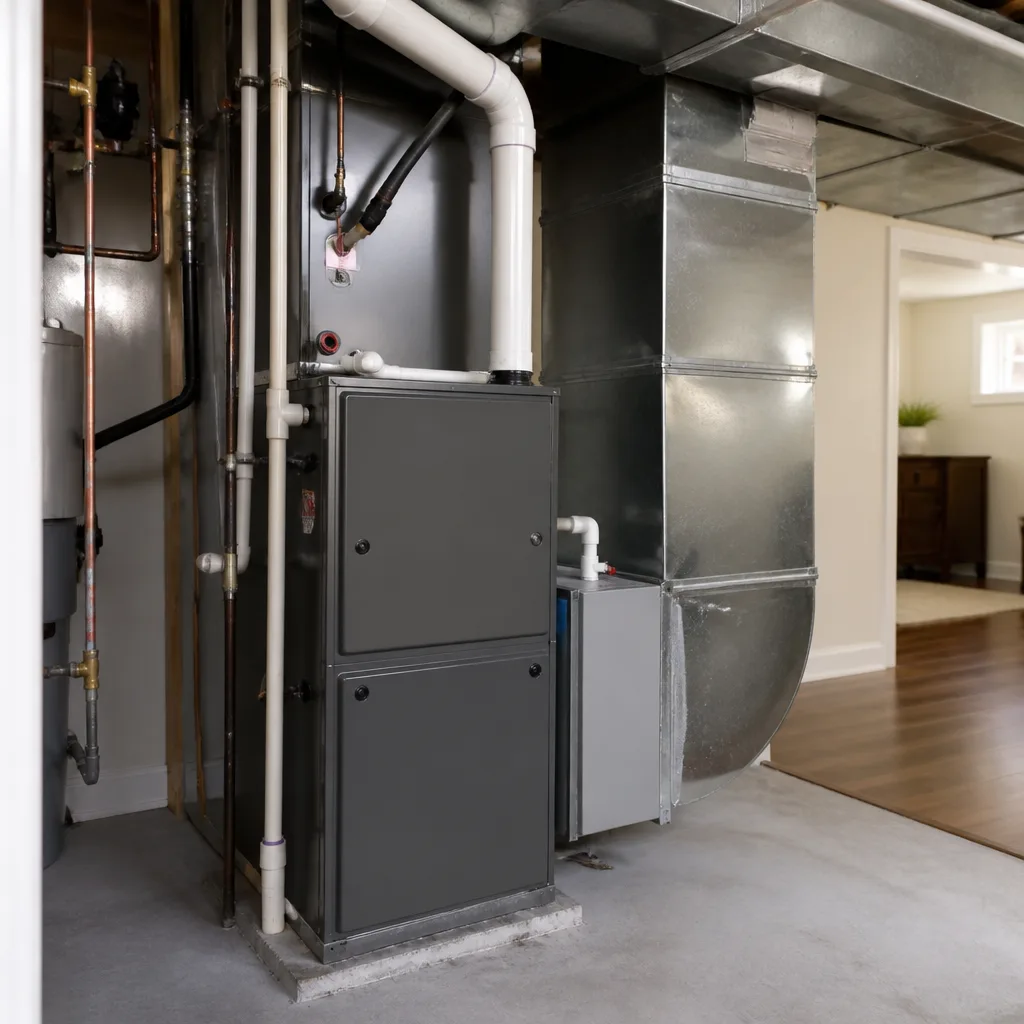
 Heat pumps
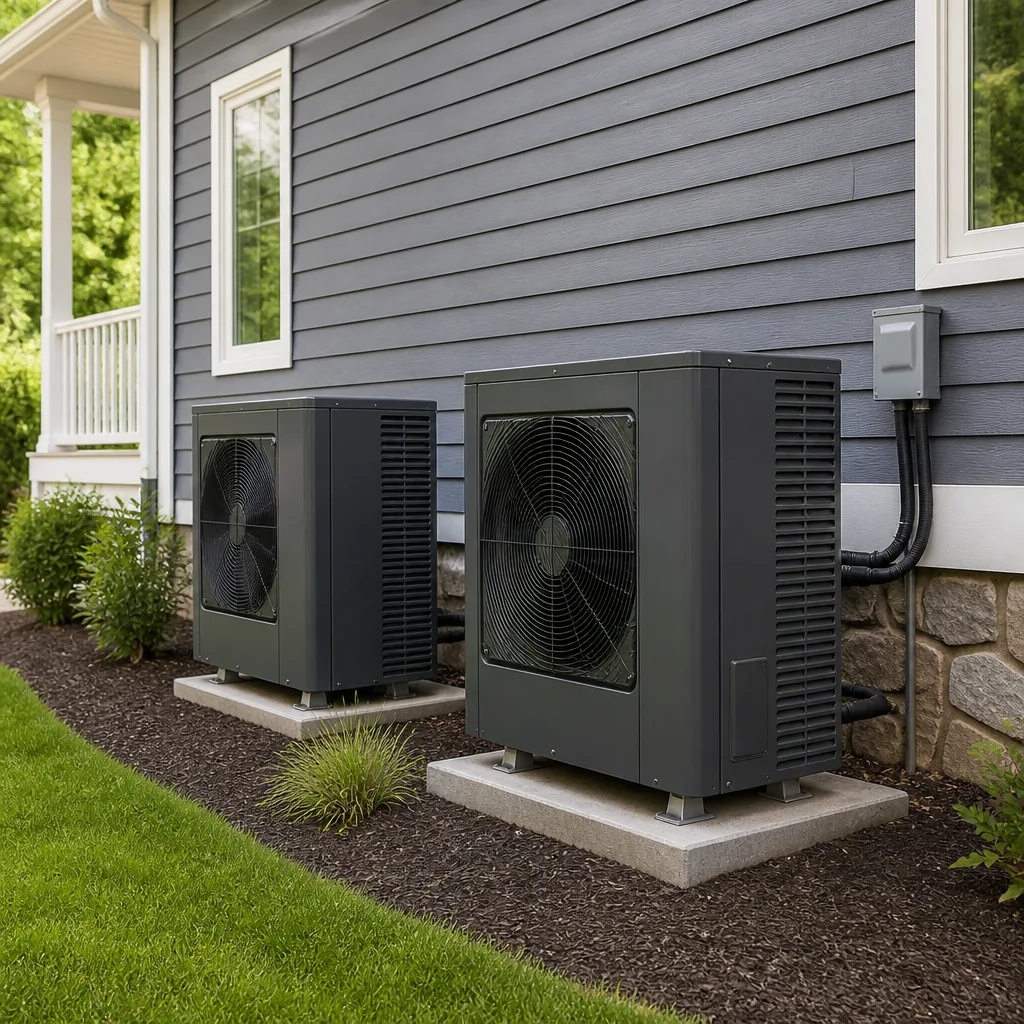
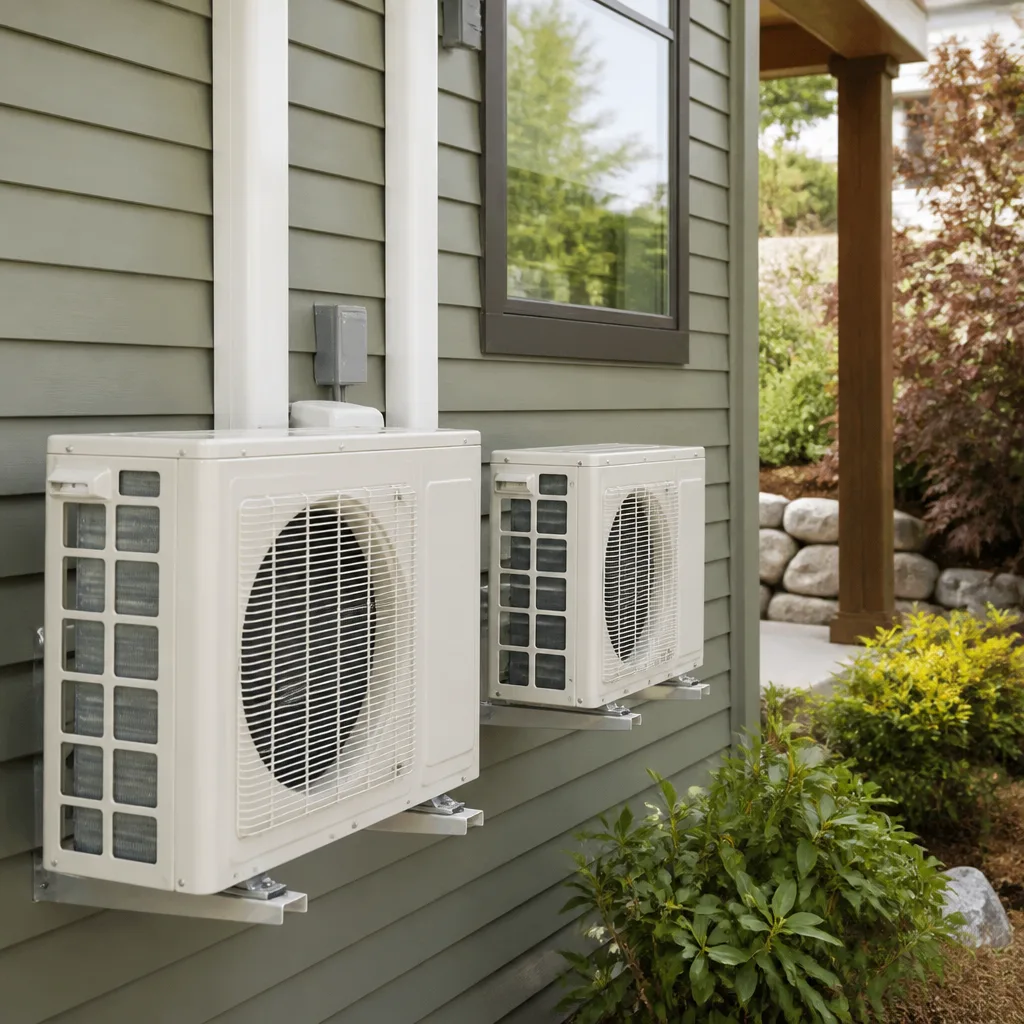 Ductless mini splits
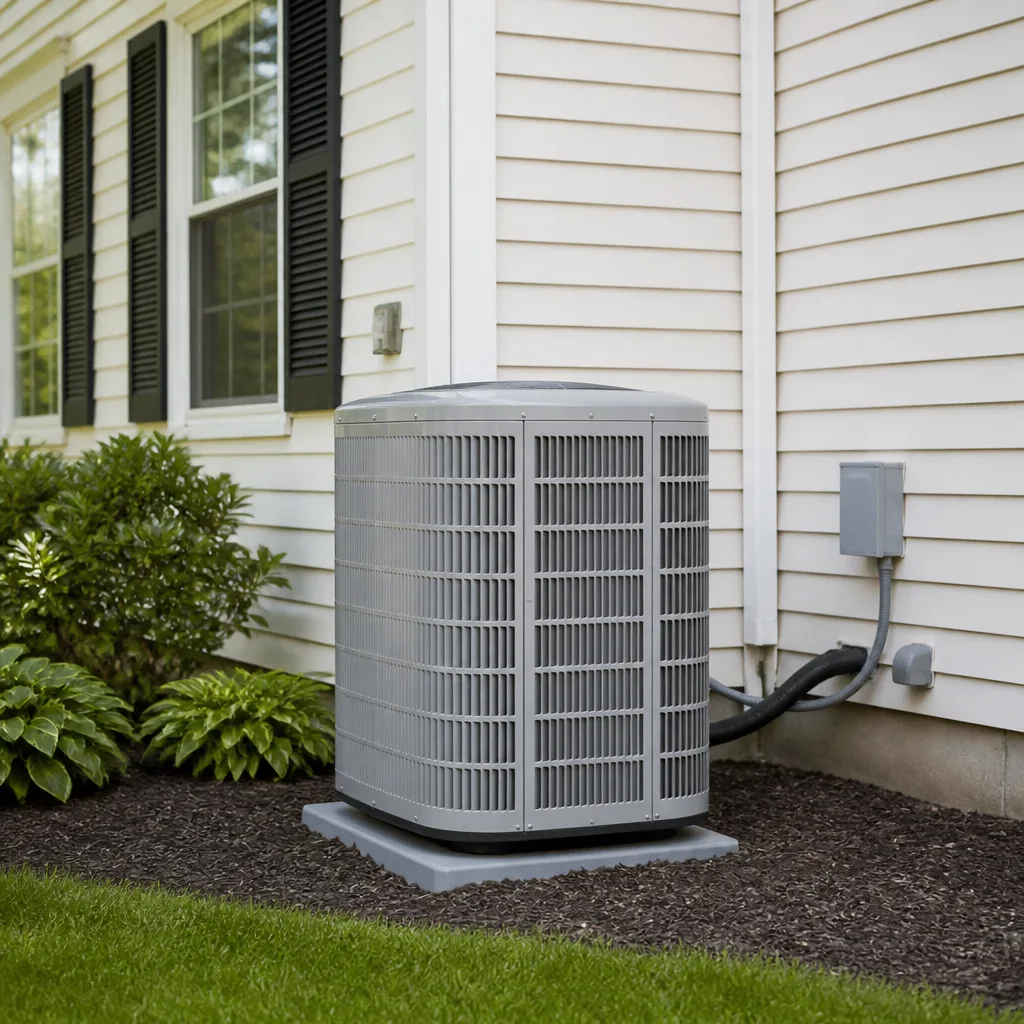 Carrier
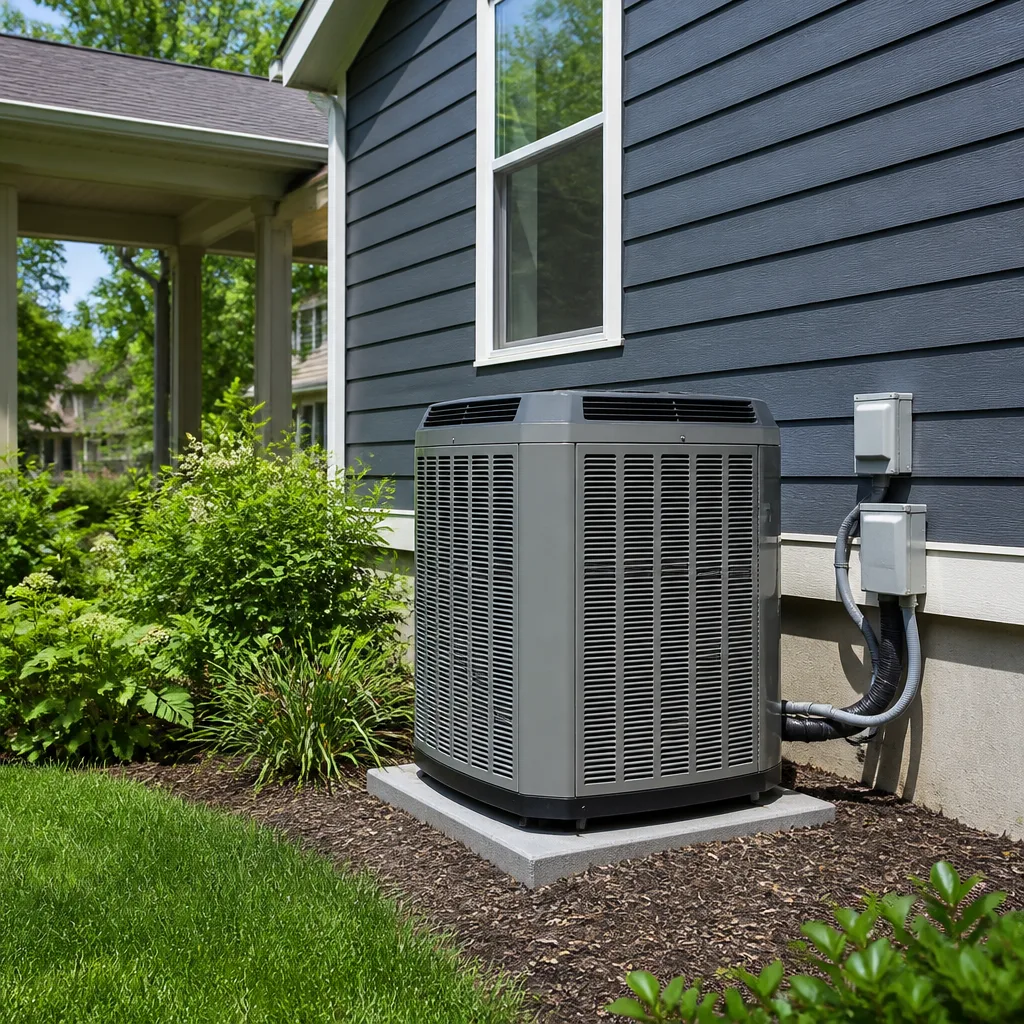 Trane
Trane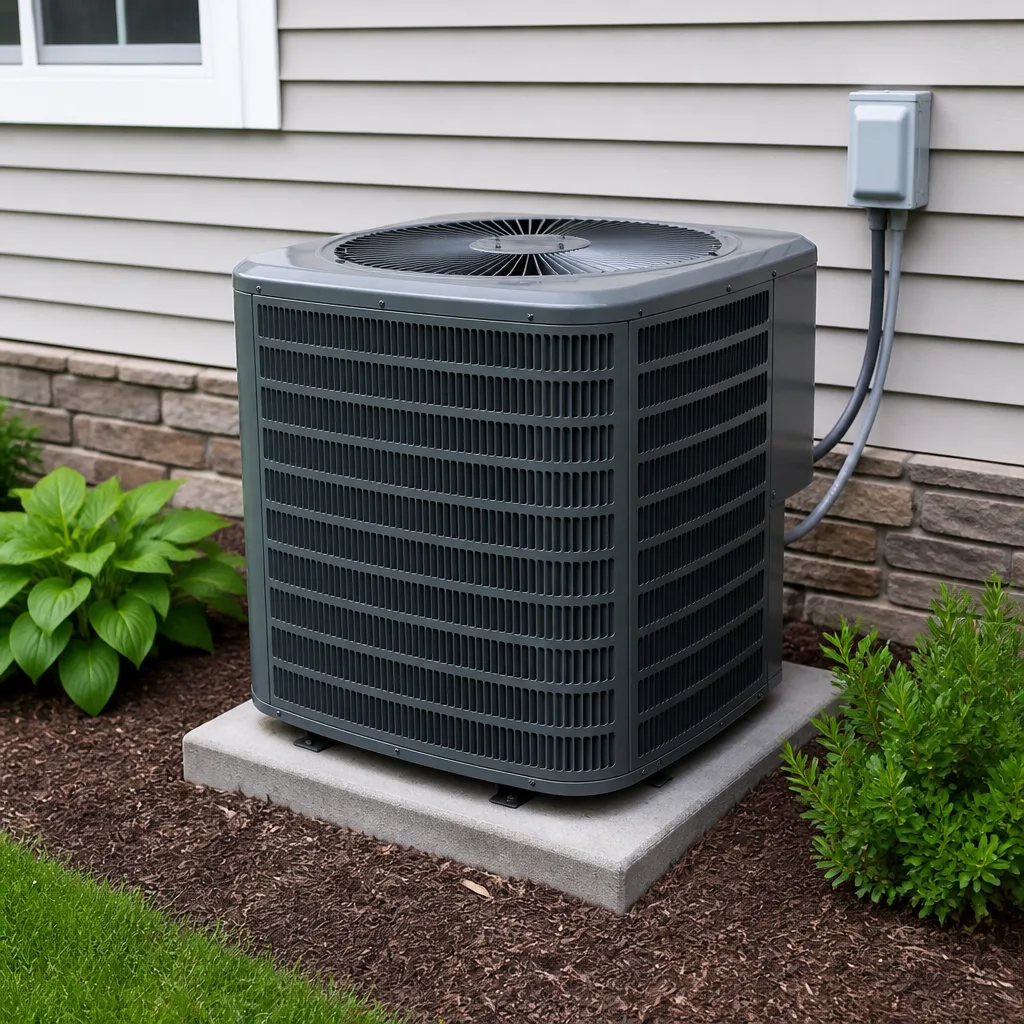 Goodman
Seasonal tune-up and full diagnostic on your Carrier, Trane, or Goodman system - readings shown to you before any repair is proposed
Diagnosis first, numbers second - you approve the repair price before a single part goes in.
Get your free estimateDIY vs Professional HVAC: The Las Vegas Homeowner’s Decision Guide
Replacing a thermostat yourself is legal, safe, and often takes 20 minutes. Adding refrigerant to your own AC unit is a federal EPA violation that carries fines up to $44,539 per day. Most DIY guides gloss over where that line actually sits, and in Las Vegas, where summer temperatures routinely cross 110°F, guessing wrong means a breakdown at the worst possible moment. This guide walks through exactly what a homeowner can legally and safely do, what requires a licensed professional, and how to avoid the expensive mistakes we see in Las Vegas homes every single year. For how to hire a HVAC contractor in Las Vegas: a step-by-step guide, see our companion resource.
Quick Answer
Most HVAC maintenance in Las Vegas, such as changing filters, cleaning condenser coils, clearing drain lines, and replacing thermostats, is safe and legal for homeowners to do themselves. Repairs involving refrigerant, electrical components beyond a basic capacitor, gas lines, or anything that could void a manufacturer warranty should always go to a licensed technician. In Las Vegas, the wrong DIY repair typically costs two to three times more to correct than the original service call would have cost.
Styles & brands we work with
Table of Contents
- The Legal Line: What Nevada Law and the EPA Actually Say
- Three DIY Tasks That Genuinely Protect a Las Vegas System
- Two DIY Tasks That Look Helpful but Cost You Money
- How DIY Work Affects Your Equipment Warranty
- Honest Cost Comparison: When DIY Saves Money and When It Backfires
- The Capacitor Case Study: A $35 Part That Became a $900 Repair
- How to Get Maximum Value From a Professional Visit
- Common Mistakes to Avoid
The Legal Line: What Nevada Law and the EPA Actually Say
The dividing line between DIY and professional HVAC work is not a matter of skill, it is a matter of law. Under the federal Clean Air Act, Section 608 of the EPA regulations, anyone who handles refrigerant in a system that contains more than a trivial amount of ozone-depleting or HFC refrigerant must hold an EPA Section 608 certification. This means you cannot legally add refrigerant to your own air conditioner, recover refrigerant, or even intentionally vent it. The fines start at $44,539 per violation per day, and each day the violation continues counts as a separate violation. Nevada law adds another layer: any HVAC work performed for compensation requires a Nevada C-21 refrigeration and air conditioning contractor’s license through the Nevada State Contractors Board. For details on local requirements, see our guide to HVAC permits, codes & inspections in NV: what you need to know. A homeowner may work on their own system without a license, but that does not override the federal refrigerant rule. In our experience, most Las Vegas homeowners are surprised to learn that the simplest-sounding fix, adding a pound of refrigerant to a slightly warm system, is the one that carries the heaviest penalty.
What a Homeowner Can Legally Do in Las Vegas
- Replace air filters of any size or MERV rating
- Clean condenser coils with water and a soft brush
- Flush a clogged condensate drain line with vinegar or a wet-dry vacuum
- Replace a thermostat, including smart thermostats, as long as the low-voltage wiring is handled carefully
- Clean debris, leaves, and dust from the outdoor unit area
- Inspect visible ductwork for disconnected joints or crushed sections
- Replace a capacitor if done cautiously and only as a temporary emergency fix, which we discuss below
What Requires a Licensed Technician
- Adding, removing, or recovering refrigerant of any kind
- Repairing or replacing a compressor, condenser coil, or evaporator coil
- Working on gas furnace burners, gas valves, heat exchangers, or any gas line
- Replacing a blower motor, control board, or any component wired to high voltage
- Installing or relocating a complete system or ductwork
- Brazing or soldering refrigerant lines
The practical takeaway is simple. In Las Vegas, you may maintain your system and handle light peripheral components, but you may not open the sealed refrigeration circuit or touch the gas train. Those are professional-only tasks, and no YouTube tutorial changes the statute.
Three DIY Tasks That Genuinely Protect a Las Vegas System
The Las Vegas climate punishes HVAC equipment harder than almost anywhere in the country. Dust, extreme heat, and constant summer operation mean that small maintenance tasks delivered consistently can extend equipment life by years. Three tasks stand out as genuinely valuable work a homeowner can and should do.
1. Change the Air Filter Every 30 to 45 Days During Peak Season
Las Vegas air is dry, dusty, and loaded with fine particulate. A clogged filter is the single most common cause of reduced cooling capacity, frozen coils, and premature blower motor failure that we see. Most Las Vegas systems run nearly continuously from May through September, which means a filter that would last three months in a milder climate might last six weeks here. Use a pleated filter with a MERV rating between 8 and 11. Anything higher than MERV 13 can restrict airflow on a residential system that was not designed for it, which reduces efficiency and can cause icing. Write the install date on the filter frame with a permanent marker so you have a visual reminder.
2. Keep the Outdoor Condenser Coil Clean
The condenser coil is the metal lattice visible on the outside of the outdoor unit. In Las Vegas, it collects dust, cottonwood fluff, palm debris, and fine sand constantly. A dirty coil forces the compressor to run hotter and longer, which consumes more electricity and shortens compressor life. Cleaning it is simple: turn off the power at the breaker or the outdoor disconnect box, remove the outer cover if your unit has one, and spray the coil from the inside out with a garden hose on moderate pressure. Never use a pressure washer, which can bend the delicate fins and permanently reduce cooling capacity. Do this twice a year, once before summer and once after the dust storms of late summer. A unit that runs with a clean coil may use 10 to 20 percent less electricity than one with a blanket of dust, and in a Las Vegas summer that translates to real money.
3. Flush the Condensate Drain Line
Air conditioning creates gallons of condensation every day in Las Vegas, and that water travels through a narrow PVC drain line to the outside or into a plumbing drain. Algae, mold, and mineral deposits build up inside the line over time. A clogged line causes water to back up into the drain pan, and from there it can overflow into the ceiling, crawlspace, or mechanical closet. Pour one cup of white vinegar into the drain line access point near the indoor unit once a month during cooling season. Vinegar kills algae and dissolves mineral scale without damaging the PVC. If the line is already slow, use a wet-dry vacuum on the exterior drain opening to pull the clog out. This five-minute task prevents the most common cause of water damage we see in Las Vegas homes.
Two DIY Tasks That Look Helpful but Cost You Money
Some homeowner tasks are legal but counterproductive. We see these two frequently in Las Vegas, and both end with a service call that could have been avoided.
1. Using a Nest or Ecobee Thermostat Without Checking Compatibility First
Smart thermostats are genuinely useful, and the installation is legal for a homeowner. The problem is that not every Las Vegas home has a C-wire, the common wire that delivers continuous power to the thermostat. Some older Las Vegas homes, particularly in neighborhoods built before 1990, lack a C-wire. If you install a smart thermostat without a C-wire, the thermostat steals power from the control circuit, which can cause the AC compressor to short-cycle, the fan to run unpredictably, or the thermostat to reboot every few minutes. Some units include a power extender kit, but installing one incorrectly can damage the control board. If you are unsure whether your wiring supports a smart thermostat, pull your existing thermostat off its base and look for a wire connected to the C terminal before you spend $250 on a new unit. If there is no C-wire, call a technician. A professional thermostat installation in Las Vegas typically costs less than $200, and it includes the wiring verification that protects your equipment.
2. Closing Vents or Doors to Redirect Cooling
It seems logical: close a vent in an unused bedroom and the air goes somewhere else. But residential HVAC systems are balanced for a specific static pressure, and closing vents increases it. The blower motor works against more resistance, the evaporator coil gets colder than designed, and the system either freezes up or runs inefficiently. In Las Vegas, where systems run for months at a time, the cumulative strain from closed vents can shorten blower motor life significantly. The same goes for closing interior doors. A closed door creates a pressure imbalance in that room, which forces the return air system to pull air from wherever it can, often through wall cavities or from the attic, which pulls hot outside air into the conditioned envelope. Keep interior doors open or at least cracked during cooling season. If you want room-by-room temperature control, the legitimate solution is a zoned system with motorized dampers, and that is a professional installation.
How DIY Work Affects Your Equipment Warranty
Every major manufacturer, including Goodman, Rheem, York, and Daikin, includes warranty language that limits coverage when work is performed by someone other than a licensed HVAC professional. The exact wording varies by brand, but the principle is uniform. Most warranties state that damage caused by improper installation, unauthorized service, or the use of non-approved parts is excluded from coverage. A Goodman warranty, for example, states that the warranty does not cover damage resulting from services performed by anyone other than a qualified installer or service technician. Rheem uses nearly identical language, as do York and Daikin.
What this means in practical terms is straightforward. If you replace a capacitor yourself and miswire it, and the miswired capacitor sends the wrong voltage to the compressor, the compressor fails, and the compressor is under warranty, the manufacturer will deny the claim. The warranty does not cover the parts themselves in a DIY context, but it also does not cover the collateral damage caused by an improper DIY repair. In Las Vegas, where a compressor replacement can run $2,500 to $4,000 depending on the brand and tonnage, losing warranty coverage is more expensive than any service call. If you own a system that is less than 10 years old and still under parts warranty, the safest financial decision is to let a licensed technician handle anything beyond the three maintenance tasks listed above. A service call at AC repair rates in Las Vegas is dramatically cheaper than buying a compressor out of pocket.
How to Check Your Warranty Status
- Find the model and serial number on the outdoor unit’s data plate, typically on the back or side panel
- Go to the manufacturer’s website, Goodman, Rheem, York, Daikin, or whichever brand you have, and enter the serial number in the warranty lookup tool
- Check whether the warranty was registered. Most manufacturers require registration within 60 or 90 days of installation for the full coverage period. Unregistered systems often default to a shorter base warranty, sometimes five years instead of ten
- Note the coverage period for the compressor, coils, and parts separately, as they can differ
- Keep your installation paperwork and any service records in one folder. If a warranty claim is filed, the manufacturer will ask for proof of installation date and proof that maintenance was performed
If you cannot find your paperwork, a technician can look up the registration status during a service visit. We run warranty checks on every repair call because knowing whether a part is covered changes the entire repair recommendation.
Honest Cost Comparison: When DIY Saves Money and When It Backfires
The honest answer to whether DIY saves money is that it depends on the task, and in Las Vegas, the stakes are higher because the system runs harder and fails more dramatically. Here is a breakdown of what common DIY tasks actually cost versus what a professional service typically runs in the Las Vegas market. For detailed pricing context, see our HVAC cost breakdown: the Las Vegas homeowner’s reference for 2026.
| Task | DIY Cost (Parts Only) | Professional Cost in Las Vegas | Verdict |
|---|---|---|---|
| Replace air filter (MERV 8-11) | $15-$40 | $25-$60 as part of a maintenance visit | DIY clearly worth it |
| Clean condenser coil | $0-$20 for coil cleaner | $80-$150 as part of a tune-up | DIY worth it if done correctly |
| Flush condensate drain line | $5 for vinegar | $90-$160 if a technician clears a clog | DIY worth it as prevention |
| Replace thermostat | $60-$300 for the unit | $150-$250 including installation and wiring verification | DIY reasonable if C-wire is present |
| Replace capacitor (emergency) | $15-$40 for the part | $150-$280 including diagnosis and testing | See case study below |
| Add refrigerant | Illegal without EPA 608 certification | $200-$500 depending on refrigerant type and amount | Professional only, no exception |
| Replace blower motor | $150-$400 for the motor | $450-$900 including labor and testing | Professional strongly recommended |
| Replace compressor | $800-$1,800 for the part | $2,500-$4,000 installed with warranty | Professional only, no exception |
The pattern is clear. Maintenance tasks, filter, coil, drain, and thermostat, are genuine money-savers when done correctly. Repair tasks involving sealed systems, electrical components, or gas are false economies. The professional fee buys diagnosis, liability, warranty protection, and the assurance that the repair will not fail during a Las Vegas heat wave.
The Capacitor Case Study: A $35 Part That Became a $900 Repair
Capacitors are one of the most common AC failure points in Las Vegas because the intense heat degrades the dielectric material inside the component. It is a metal cylinder, usually silver or gray, mounted inside the outdoor unit. It provides the electrical jolt that starts the compressor and the fan motor. When it fails, the fan may not spin, the compressor may hum and trip the breaker, or the system may not start at all. Capacitors are available online for $15 to $40, and they are not restricted against homeowner purchase. This is where the DIY temptation kicks in hardest.
The danger is not the replacement itself. The danger is that a failed capacitor often has a root cause, and a homeowner replacing the capacitor without diagnosing the root cause is treating a symptom. Here is a scenario we have seen in Las Vegas more than once. A homeowner’s AC stops cooling on a 108°F day. The fan is not spinning. The homeowner, reasonably, finds a YouTube video, orders a capacitor, installs it, and the system runs again. For three weeks. Then the compressor burns out because the capacitor that failed was a symptom of a refrigerant overcharge or an electrical issue that placed extra load on the compressor. The compressor, which would have been covered under warranty with a professional diagnosis, is now a $900 to $1,500 replacement because the manufacturer denies a warranty claim when the failure follows an unauthorized repair. The saved service call cost the homeowner a compressor.
The safe middle ground exists. If you are comfortable working with electrical components and you understand the risks, replacing a capacitor as an emergency stopgap can restore cooling for a few days while you schedule a professional diagnostic. Shut off the breaker to the outdoor unit, discharge the capacitor with an insulated screwdriver across the terminals, photograph the wiring before removing anything, and match the microfarad rating exactly, typically 35/5, 40/5, or 45/5 for residential units. But treat the DIY capacitor as a temporary bridge, not a permanent fix. Have a technician inspect the system afterward to determine why the capacitor failed. A furnace repair or AC diagnostic costs a fraction of what a compressor replacement costs, and it tells you whether the real problem is still waiting upstream.
How to Get Maximum Value From a Professional Visit
When the job is beyond DIY, the value you get from a professional visit depends partly on how you prepare. A well-prepared homeowner gets a faster diagnosis, a clearer explanation, and a smoother repair. Here is how to prepare for a technician visit in Las Vegas.
Before the Technician Arrives
- Write down the symptoms in specific terms: when the problem started, whether it happens at certain times of day, whether the system runs but does not cool or does not run at all, and what you have already tried. Specific information shortens diagnosis time
- Locate your indoor unit, outdoor unit, and thermostat. Clear a path to each. Move boxes, holiday decorations, or storage away from the equipment
- If you have a home warranty or manufacturer warranty paperwork, have it ready
- Write down the model and serial numbers from the data plates on both units. This saves the technician time and makes the warranty check faster
- Make a note of anything unusual you have noticed, even if it seems unrelated: a new noise, a smell, a breaker that trips, a room that always feels warmer
Questions to Ask Before the Work Begins
- What is the price, in writing, before any work starts?
- Does the quote include parts and labor, or are there additional charges?
- Is this repair covered by a written guarantee, and for how long?
- What caused the failure, and will this repair address the cause or just the symptom?
- Is the affected part still under manufacturer warranty?
- Are there any rebates, financing options, or replacement alternatives worth considering?
The answers to these questions separate a service company that operates on trust from one that operates on written commitments. The Kingswell Way, the operating standard we follow, requires that the price be delivered in writing before the work begins, that the arrival window be honored, that the job site be left cleaner than we found it, and that the guarantee be printed and handed to the homeowner before the technician leaves. If your technician cannot answer those questions directly, you are within your rights to pause the work.
What to Expect During the Visit
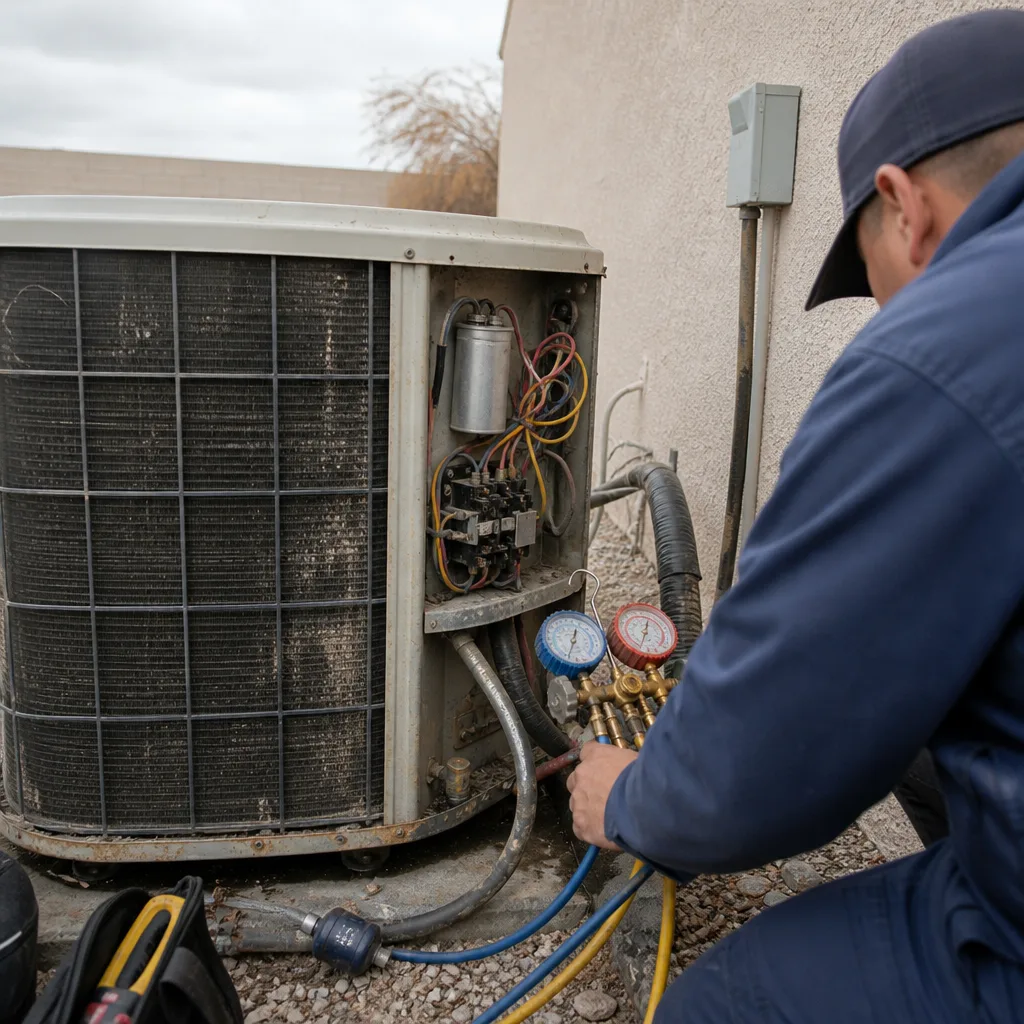
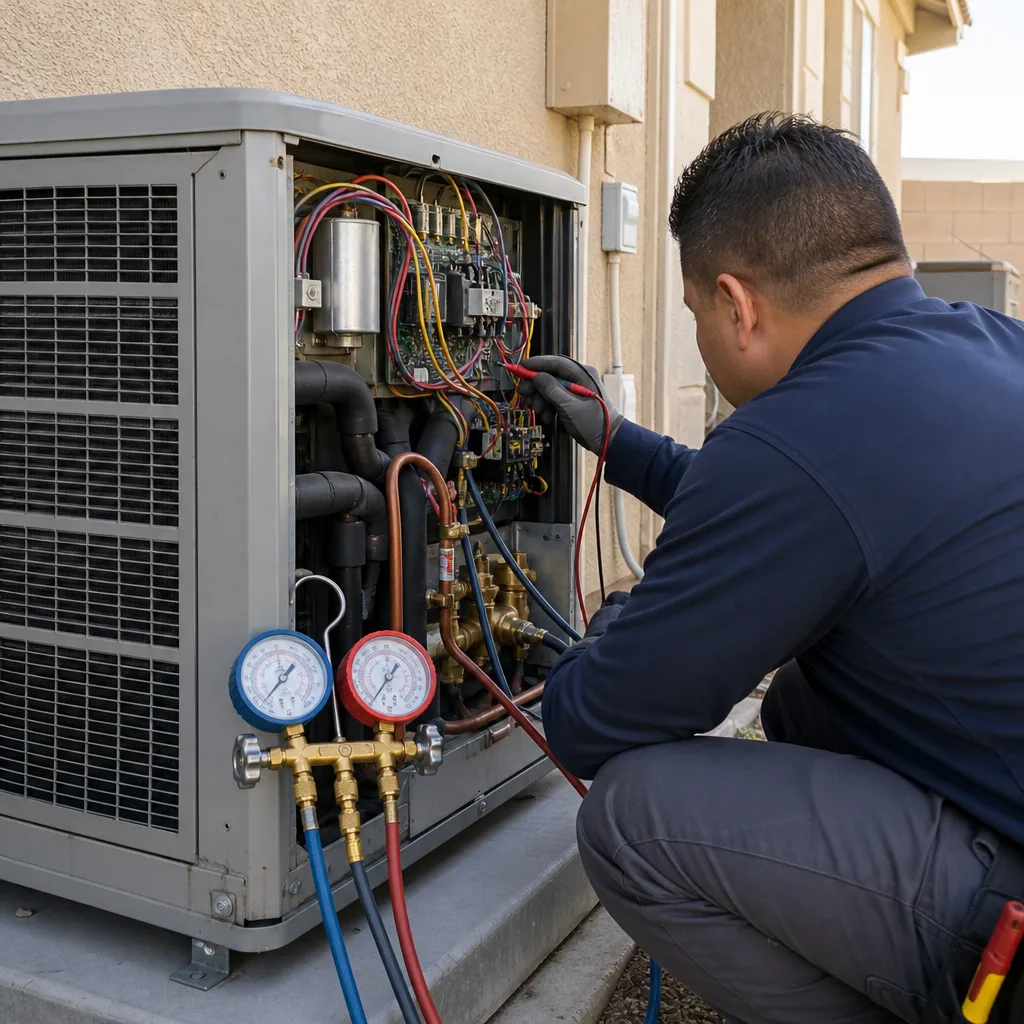
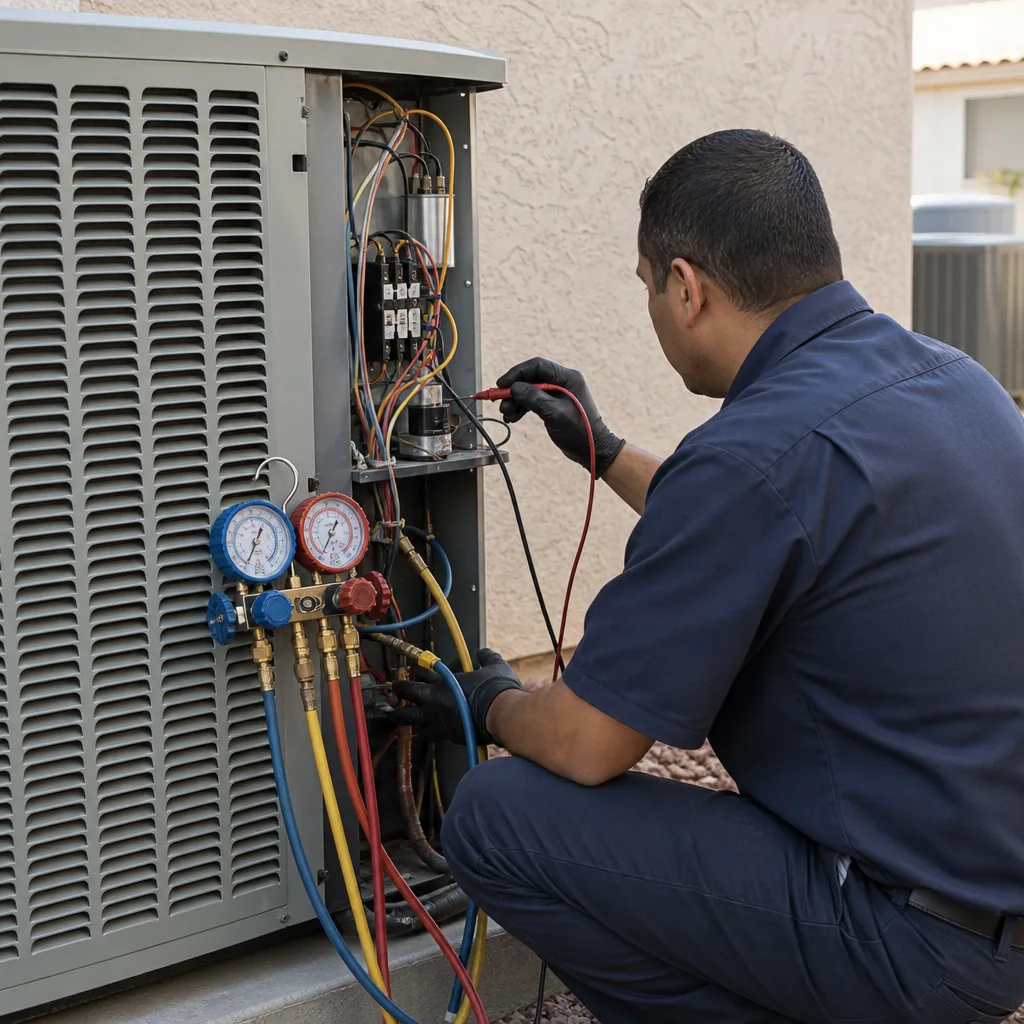
A thorough HVAC diagnostic in Las Vegas should take 45 to 90 minutes for most common issues. The technician should inspect the thermostat, the indoor air handler, the outdoor unit, the visible ductwork, and the electrical connections. They should test the capacitor, the contactor, the refrigerant pressures, and the temperature differential across the evaporator coil. They should explain what they found in plain English and show you the readings if you ask. A technician who is willing to show you the readings and explain what they mean is demonstrating that the diagnosis is real, not a sales pitch. The team at Cold Harbour Heating and Air Las Vegas, serving Las Vegas since 2003, operates on that principle, and our technicians are trained to walk homeowners through the diagnosis step by step.
Common Mistakes to Avoid
- Buying a replacement part before diagnosing the failure. A capacitor that fails is often a symptom, not the disease. Replacing a part before understanding the cause leads to repeat failures and denied warranty claims.
- Using a MERV 16 filter on a residential system. High-MERV filters restrict airflow, increase static pressure, and cause coils to freeze in Las Vegas heat. Stick with MERV 8-11 unless your system is specifically rated for higher.
- Ignoring a puddle near the indoor unit. Water around the air handler usually means a clogged condensate line or a cracked drain pan, and it only worsens. In Las Vegas, where humidity is low, homeowners often dismiss condensation issues until a ceiling stains.
- Attempting to repair a gas furnace burner or gas valve without training. Gas work carries carbon monoxide and fire risks. Nevada requires a licensed contractor for gas line work, and the danger of an improper seal is invisible and deadly.
- Delaying a service call because the AC is “still kind of cooling.” A system that cools weakly is working harder than designed, which means it is consuming more electricity and wearing out faster. A low refrigerant charge that would cost $250 to correct can become a $3,000 compressor failure if ignored for a season.
- Assuming a home warranty covers everything. Home warranty companies often exclude damage from lack of maintenance, and they may require proof of annual professional service. Read the policy before counting on it.
- Choosing a repair company based on price alone. In Las Vegas, the cheapest quote is often missing something: a written guarantee, a licensed technician, or a legitimate diagnosis. Ask what the price includes, and ask for it in writing.
See the difference
 Before
 After
After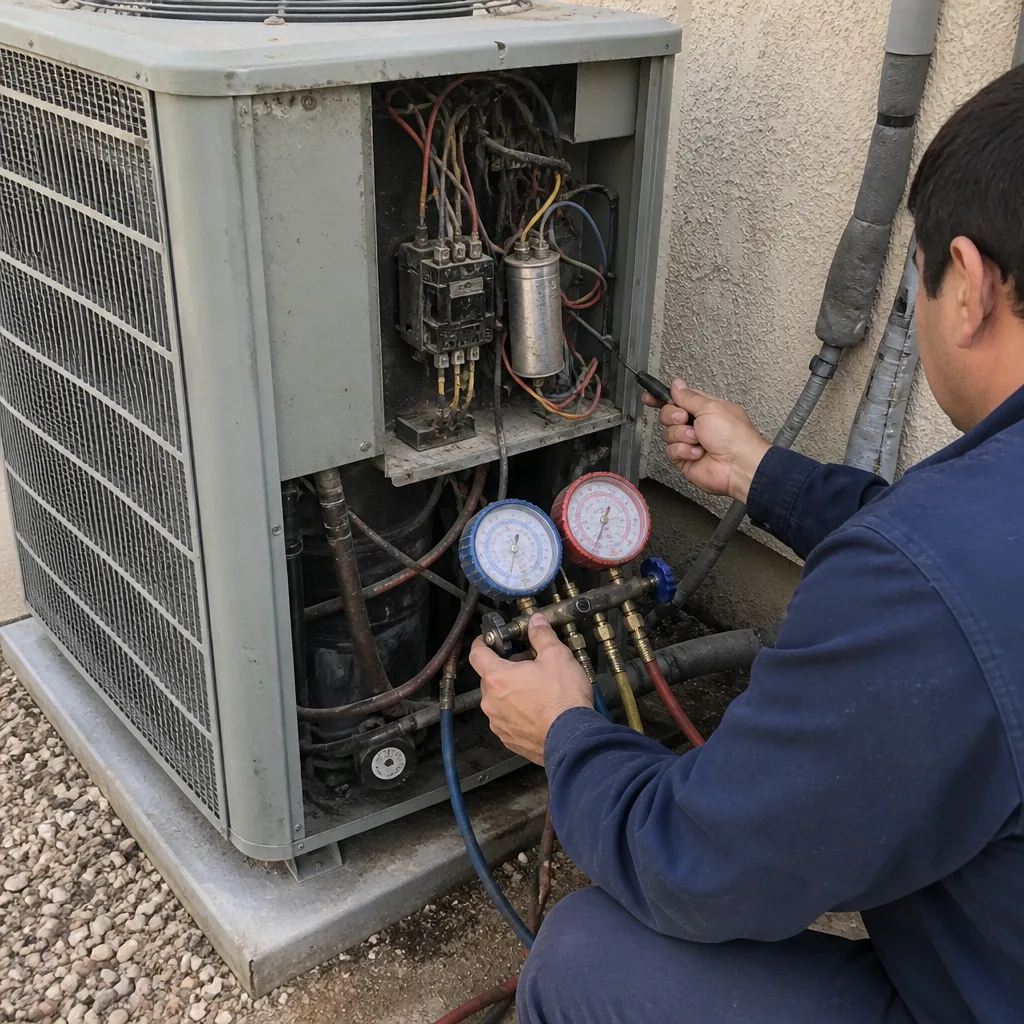 Before
 After
After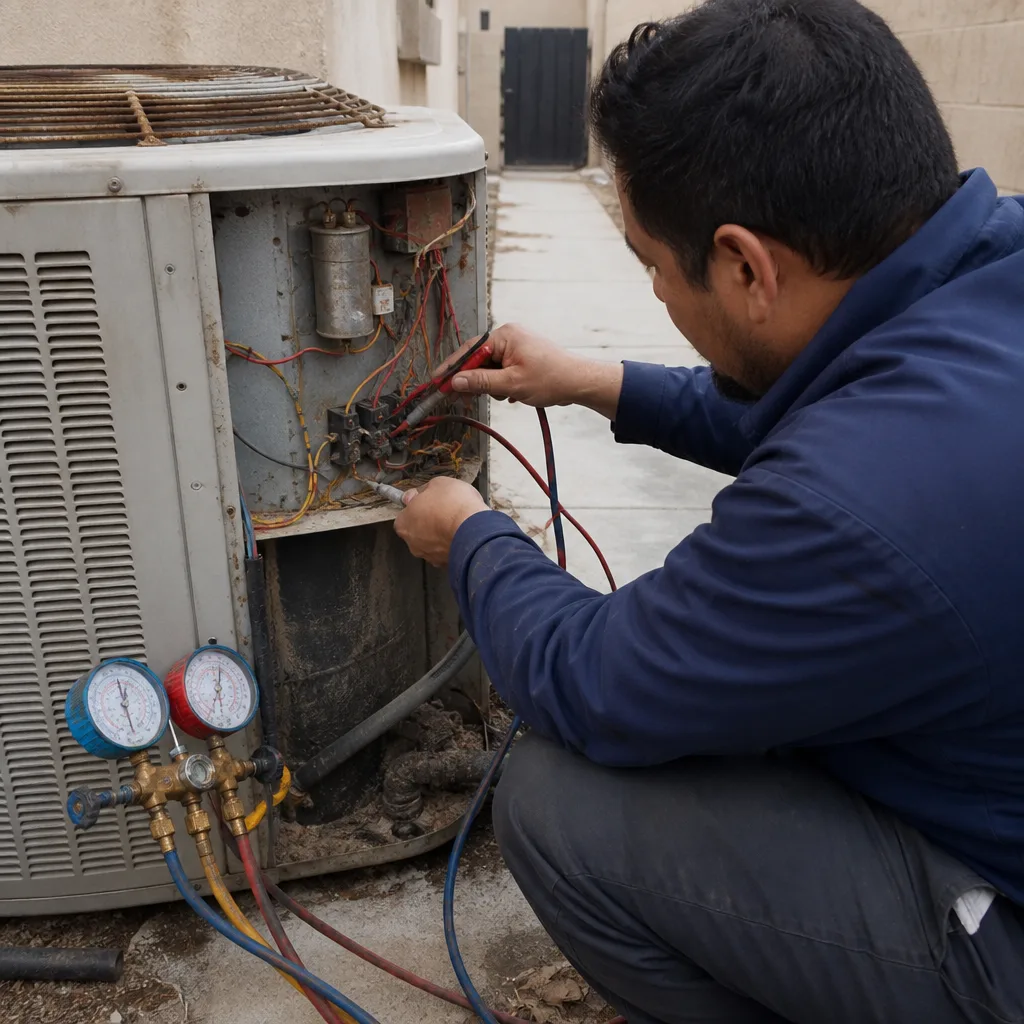 Before
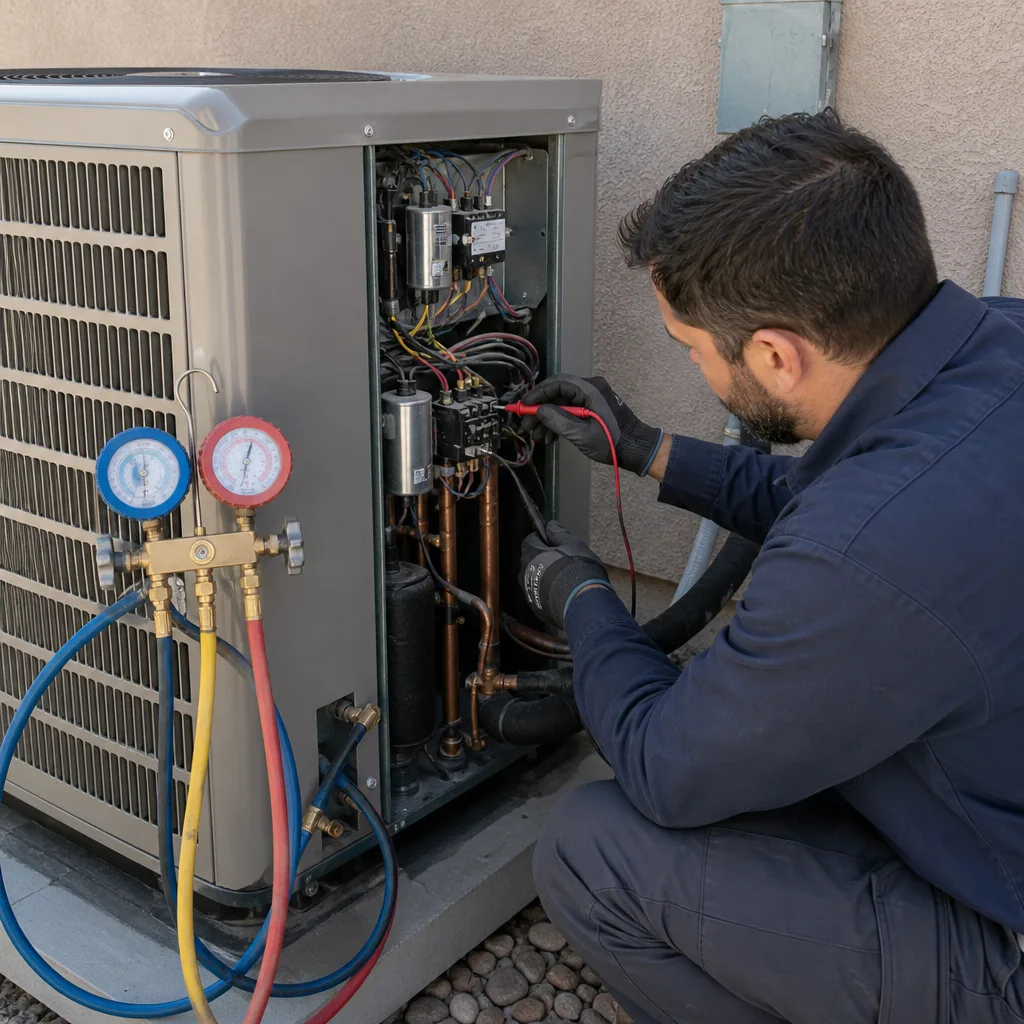 After
AfterWhen to Call a Professional
Call a professional when the issue involves refrigerant, gas, high-voltage electrical components, or a compressor. Call a professional when the system is under warranty and the repair could affect coverage. Call a professional when you have already tried the safe DIY tasks and the system still underperforms. Call a professional when the symptom is intermittent, because intermittent failures usually indicate a control board or electrical issue that is difficult to diagnose without professional equipment. And call a professional when the outside temperature is above 100°F and your system is down, because a failed air conditioning system in Las Vegas is not an inconvenience, it is a health risk. Cold Harbour Heating and Air Las Vegas offers free estimates in Las Vegas and answers the phone with a live person around the clock. Call (725) 726-3813 and you will speak with a person, not a voicemail tree, no matter the hour.
Frequently Asked Questions
No. Federal EPA regulations under Section 608 require an EPA certification for anyone who handles refrigerant in a residential AC system, regardless of whether you own the home. The fines can reach $44,539 per day per violation. A licensed Las Vegas HVAC technician is the only legal option for adding refrigerant or repairing a leak.
Yes, you can legally purchase and replace a capacitor as an emergency measure, but it is not recommended as a permanent repair. A failed capacitor often has an underlying cause, and treating the symptom without addressing the cause can lead to a failed compressor and a denied warranty claim. If you do replace one yourself, schedule a professional diagnostic afterward.
Not automatically, but the manufacturer will deny a claim if a failure is caused by improper service or unqualified work. Most manufacturer warranties, including those from Goodman, Rheem, York, and Daikin, contain language excluding damage from unauthorized repairs. The warranty is most at risk when a DIY repair creates a cascading failure, such as a miswired capacitor damaging a compressor.
Every 30 to 45 days during cooling season, which in Las Vegas runs from roughly May through September. The dust and fine particulate in Las Vegas air clog filters faster than in most cities, and a system running near-continuously in summer needs more frequent filter changes than a system in a milder climate.
Closing vents and interior doors to redirect airflow. It seems logical, but it increases static pressure, strains the blower motor, and can cause the coil to freeze. The fix is a zoned system with motorized dampers, not manually closing vents.
Most professional diagnostics in Las Vegas run between $79 and $150, and many companies, including Cold Harbour Heating and Air, apply the diagnostic fee toward the repair if you proceed. Exact quotes are free, which means you can get a written price before committing to any work. Call (725) 726-3813 for a current diagnostic rate.
The Bottom Line
The honest answer to the DIY-versus-professional question is that it depends entirely on the task. In Las Vegas, a homeowner should absolutely change filters, clean coils, flush drain lines, and replace thermostats. Those tasks save money and protect a system that works harder here than almost anywhere else in the country. But a homeowner should never touch refrigerant, gas, high-voltage components, or a compressor, because the legal and financial consequences dwarf the cost of a service call. And when the repair is beyond DIY, choose a company that puts its promises in writing: a Las Vegas AC installation or repair agreement should carry a price before work begins, a firm arrival window, and a written guarantee that lasts a full year. That is the standard Cold Harbour Heating and Air was built on in 2003, and it is the standard every Las Vegas homeowner should demand.
Written by Victor Mancini, Owner at Cold Harbour Heating and Air Las Vegas, serving Las Vegas since 2003.